The quick answer
Metal detecting is a hobby where you use a metal detector to search for buried or hidden metal objects. Detectorists may find coins, buttons, buckles, jewellery, tokens, military items, farm objects, lead, scrap metal, and occasionally historically important artefacts.
In plain English:
Metal detecting is basically a treasure hunt, history lesson and long walk rolled into one, with a fair amount of rubbish digging included for character building.
Beginner metal detecting guide
What Is Metal Detecting And Why Do People Love It?
A simple beginner-friendly guide to what metal detecting actually is, what detectorists look for, and why so many people get completely hooked on the hobby.
But that is part of the charm. Metal detecting is not just about finding treasure. It is about finding little pieces of the past and enjoying the search.
What is metal detecting?
Metal detecting is the hobby of searching for metal objects using a handheld metal detector.

The detector sends a signal into the ground through the search coil. When that signal interacts with metal, the detector gives you a response, usually through a sound, number, tone or display reading.
You then decide whether to dig.
That decision is where the hobby starts becoming interesting. A signal might be a coin. It might be a button. It might be a ring. It might be a piece of lead. It might be a bit of tractor. It might be yet another ring pull pretending to be something exciting.
The detector gives you clues, but it does not tell you the full story. You learn by digging, listening, comparing, researching and slowly building your own understanding of what different signals can mean.
That is why metal detecting is more than just walking around waiting for beeps. You are constantly making little decisions.
How does metal detecting work?
The simple version is this:
A metal detector sends an electromagnetic signal into the ground. When that signal hits a metal object, the object responds, and the detector picks up that response through the coil.
The control box then turns that response into something you can understand, usually sound, numbers, target ID, or a visual display.
Better detectors can give you more information about what might be under the coil, such as whether the target seems more like iron, foil, copper, silver or another type of metal. But no detector is perfect.
A detector can suggest:
- Whether a target is likely to be iron or non-ferrous metal.
- How strong the signal is.
- Whether the target is shallow or deeper.
- Whether the target gives a consistent tone.
- Whether it might be worth digging.
For a deeper explanation, read: How Does A Metal Detector Work?
What do people find metal detecting?
This is the bit everyone wants to know.
Yes, detectorists do find coins, jewellery, old artefacts and occasionally treasure. But they also find plenty of rubbish. That is not me being negative. That is the hobby.
For every exciting find you see online, there are usually many holes filled with foil, nails, lead, shotgun caps, can slaw and bits of farm machinery that looked much more promising in the ground.


| Find type | Examples | Beginner reality check |
|---|---|---|
| Coins | Modern coins, Georgian coppers, Victorian pennies, hammered coins, Roman coins. | Most coin finds are worn, dirty or common, but they are still great fun to find. |
| Jewellery | Rings, earrings, pendants, brooches, chains and clasps. | Beaches and parks can be good for modern jewellery, where detecting is allowed. |
| Buttons and buckles | Clothing buttons, livery buttons, shoe buckles, harness buckles and strap fittings. | These can be more interesting than beginners first realise. |
| Lead items | Musket balls, tokens, bag seals, weights, scrap lead and odd mystery lumps. | Lead will test your patience but can produce some brilliant little finds. |
| Artefacts | Brooch fragments, mounts, thimbles, dress hooks, tokens, harness fittings and tools. | Some need proper recording or expert identification. |
| Rubbish | Ring pulls, foil, cans, nails, shotgun caps, tractor parts and mystery junk. | You will dig rubbish. Everyone does. Anyone pretending otherwise is fibbing. |
Interesting non-treasure finds can be voluntarily recorded with the Portable Antiquities Scheme, which builds a public record of what turns up across England and Wales. If you are not sure what something is, our guide on how to identify metal detecting finds walks through it.
Why people get hooked
Why do people go metal detecting?
People go metal detecting for lots of different reasons.
Some love the history. Some love the outdoors. Some like the peace and quiet. Some enjoy the research. Some enjoy the social side. Some just like the mystery of not knowing what the next signal might be.
For me, the appeal is that every signal is a little question.
Most of the time, the answer is “rubbish”. But occasionally, the answer is a coin, a token, a buckle, a seal, a button, a piece of local history, or something that makes you stop and think about the person who last held it.
That little connection with the past is hard to beat.
The main reasons people enjoy metal detecting
Metal detecting attracts all sorts of people because it offers more than one type of reward.
The history
You are not just finding objects. You are finding clues to how people lived, worked, travelled and lost things.
The mystery
Every signal could be something dull or something brilliant. That unknown bit keeps the hobby exciting.
The fresh air
It gets you outside, walking, moving and away from screens for a while. That alone is worth something.
The peace
A quiet field, headphones on, nobody bothering you, just you and the next signal. Bliss.
The research
Old maps, local history, field names and landscape clues can become just as interesting as the detecting itself.
The community
Clubs, rallies, forums and detecting friends can make the hobby feel social as well as peaceful.
Metal detecting is a way to connect with history
This is the bit that really separates metal detecting from simply collecting old things.
When you find something in the ground, it has context. It came from a place. A field. A path. A beach. A farm. A village edge. A lost building site. A place where people once moved through the landscape.
Even ordinary finds can be interesting when you start thinking about them properly.
A button might have fallen from someone’s coat while they worked. A coin might have been dropped on the way to market. A lead seal might tell you about trade. A buckle might be from clothing, harness or equipment. A musket ball might connect to shooting, hunting, training or conflict.
The object is only part of the story. Where it was found is part of the story too.
Beginner mindset:
Do not only ask “what is it worth?” Ask “what is it, who might have used it, and what does it tell me about this place?”
That is when the hobby gets really interesting.
Is metal detecting all about finding treasure?
No.
Treasure is the headline-grabbing part of the hobby, but it is not the normal day-to-day reality.
Most detectorists do not go out and find gold hoards every weekend. Most of us are happy with a decent coin, an old buckle, a nice button, a bit of silver, or even just a mystery object that gives us something to research when we get home.
That is not a bad thing. If you only enjoy detecting when you find something valuable, you will probably get frustrated very quickly.
The best detectorists enjoy the process. The walking, the research, the permission, the learning, the signals, the landscape, the small finds and the stories behind them.
You will enjoy metal detecting more if you like:
- Being outdoors.
- Learning local history.
- Solving little mysteries.
- Walking and exploring.
- Researching maps and old places.
- Finding ordinary objects interesting.
- Being patient when the good finds do not appear.
The treasure is nice. The hobby is bigger than the treasure. On the rare occasion something does qualify as Treasure, there is a proper legal process to follow, which we cover in the guides below.
Is metal detecting easy to start?
Yes, but there is a learning curve.
You can buy a beginner-friendly detector, get permission, and start learning fairly quickly. You do not need to be an expert before your first outing.
But you do need to learn the basics properly:
- Where you are legally allowed to detect.
- How to get permission.
- How to set up your detector.
- How to swing the coil properly.
- How to dig neat holes and leave no mess.
- How to identify basic finds.
- What to report if you find something important.
The good news is that you do not need to learn everything at once. Start simple, dig signals, make mistakes, ask questions, and improve as you go.
The bad news is you will still dig ring pulls. That part never fully goes away.
Where do people go metal detecting?
Detectorists search in all sorts of places, but the important thing is permission.
You cannot just wander into a field, park, woodland, beach, old ruin or public footpath and start detecting because it looks interesting. Land is owned by someone, and some places are protected or restricted.
Common detecting locations include:
| Location | Why people detect there | Important note |
|---|---|---|
| Farmland | Old paths, settlements, activity areas and agricultural history. | You need landowner permission. |
| Beaches | Modern coins, jewellery and occasionally older finds. | Rules vary, so check local permissions and restrictions. |
| Club digs | Organised access, social detecting and beginner support. | Follow club rules and insurance requirements. |
| Private permissions | The classic detectorist route, especially for serious hobbyists. | Agree boundaries, finds rules and access. |
| Parks or public land | Modern losses and sometimes older activity. | Usually needs council or landowner permission, where allowed. |
For the legal side, read: Where Can You Legally Metal Detect In The UK?
Different types of detectorists
Not everyone enjoys metal detecting in the same way.
Some people love beaches. Some love farmland. Some are coin mad. Some are relic hunters. Some enjoy rallies and clubs. Some like quiet solo detecting. Some spend more time researching old maps than they do actually detecting.
There is no single “proper” way to enjoy the hobby, as long as you are legal, responsible and respectful.
The history hunter
Loves old maps, local stories, artefacts and the connection to the past.
The beach detectorist
Searches sand for coins, jewellery and modern losses, often around busy tourist areas.
The coin hunter
Loves finding coins from different periods and learning how to identify them.
The social detectorist
Enjoys club digs, rallies, chatting finds and being part of the community.
The quiet wanderer
Uses detecting as peaceful time outside, away from noise, screens and stress.
The researcher
Loves old maps, LiDAR, Google Earth, field names and planning search areas.
What do you need to start metal detecting?
You do not need a van full of gear to start.
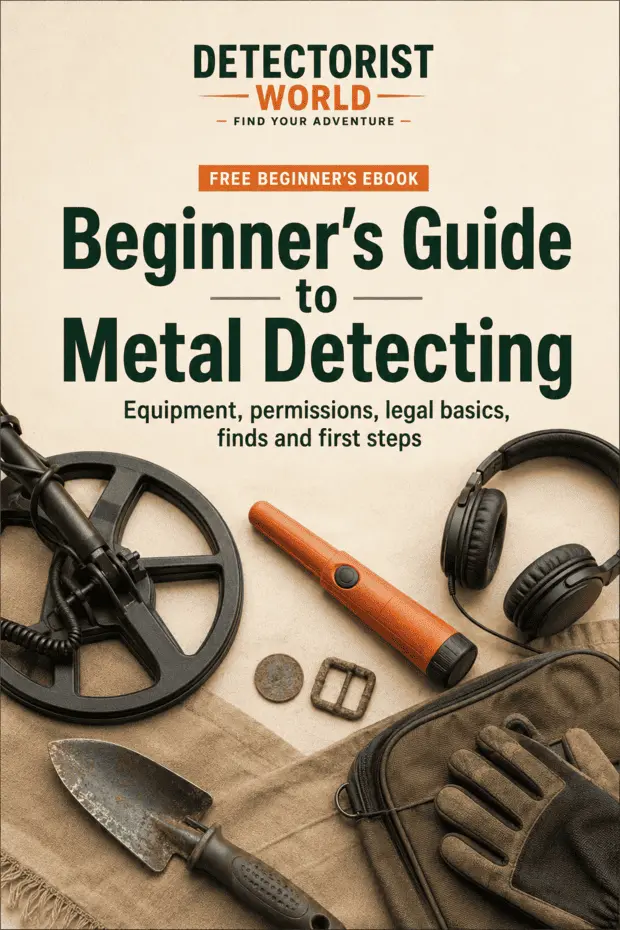
A beginner-friendly detector, permission, a digging tool, finds pouch, decent footwear, and a basic understanding of the rules will get you started.
A pinpointer is not essential on day one, but it makes life much easier. Once you have used one, going without feels like trying to find a contact lens in a gravel driveway.
Basic beginner kit
- Metal detector.
- Permission to detect.
- Digging tool.
- Finds pouch.
- Gloves.
- Suitable boots.
- Phone for photos, GPS and safety.
- Insurance or membership if required or recommended.
- Pinpointer, if budget allows.
For the full kit guide, read: What Do You Need To Start Metal Detecting?
Responsible detecting matters
Metal detecting only works as a hobby if detectorists behave properly.
That means getting permission, filling holes, respecting landowners, avoiding protected sites, reporting important finds, removing rubbish, and not acting like the rules are for everyone else.
One irresponsible detectorist can damage trust for everyone. Farmers talk. Landowners talk. Clubs talk. And if someone leaves holes, damages crops or disappears with a find they should have reported, it affects the whole hobby.
Good detectorists:
- Ask permission before detecting.
- Stick to agreed areas.
- Fill holes properly.
- Take rubbish away.
- Respect crops, livestock and wildlife.
- Record and report important finds.
- Do not detect protected or restricted sites.
- Keep good relationships with landowners.
Many detectorists follow the NCMD code of conduct, and the hobby is much better when people do it properly.
Is metal detecting the right hobby for you?
Metal detecting is brilliant, but it is not for everyone.
You need patience. You need to be happy walking. You need to cope with quiet days. You need to dig rubbish without throwing your detector into a hedge. You need to respect rules and landowners.
But if you enjoy being outdoors, like history, enjoy little mysteries, and can find pleasure in the search rather than just the result, it might be perfect for you.
| You may enjoy it if… | You may struggle if… |
|---|---|
| You enjoy walking and being outside. | You only care about making money from finds. |
| You like history and old objects. | You get annoyed by slow progress or quiet days. |
| You are patient and curious. | You hate digging rubbish. |
| You can follow rules and respect land. | You want to detect wherever you fancy without asking. |
| You like researching places and finds. | You expect every outing to produce treasure. |
What should beginners expect?
Expect to be confused at first.
Your detector will make noises you do not understand. Targets will sound better than they are. You will dig iron by mistake. You will spend too long trying to find a tiny target in a clod of mud. You will probably forget something useful. You may come home with very little.
That is normal.
Metal detecting is learned by doing. Every signal teaches you something. Every hole teaches you something. Every rubbish target helps you understand your machine a little better.
Beginner advice:
Do not judge the hobby from one outing. Give yourself time to learn the detector, the signals, the land and the rhythm of detecting.
The good finds become even better because you know how much rubbish came before them. It also helps to know the common beginner mistakes before you start.
Summary: what is metal detecting?
Metal detecting is the hobby of using a metal detector to search for buried or hidden metal objects.
But really, it is more than that. It is history, research, walking, permission, patience, curiosity and the occasional brilliant surprise.
People go metal detecting because they enjoy the mystery, the outdoors, the connection to the past, the community, and the chance that the next signal might be something interesting.
It is not all treasure. You will dig rubbish. You will have quiet days. You will wonder why every good signal seems to be foil. But if you enjoy the process, metal detecting can become one of the most rewarding hobbies out there.
Start responsibly, get permission, learn your detector, and enjoy the search.
Next beginner guide
Ready to see what you need to get started?
Once you understand the hobby, the next step is choosing the basic kit and learning what you actually need before your first outing.
FAQs about metal detecting
What is metal detecting?
Metal detecting is a hobby where you use a metal detector to search for buried or hidden metal objects such as coins, jewellery, buttons, buckles, tokens, relics and scrap metal.
Why do people go metal detecting?
People go metal detecting for the history, fresh air, exercise, research, social side, peace and quiet, and the excitement of not knowing what the next signal might be.
Is metal detecting just about finding treasure?
No. Treasure is rare. Most detectorists enjoy the hobby for the search, the history, the outdoors and the smaller finds as much as the chance of something valuable.
What can you find with a metal detector?
Common finds include modern coins, old coins, buttons, buckles, jewellery, lead items, tokens, musket balls, bag seals, tools, scrap metal and occasional artefacts.
Is metal detecting easy for beginners?
It is easy to start, but it takes time to learn properly. Beginners need to understand permission, basic detector settings, signals, digging technique and responsible finds handling.
Do I need permission to metal detect?
Yes. You need permission from the landowner or the correct authority before detecting. Some places are restricted or protected, even if they look open to the public.
Is metal detecting a good hobby?
Yes, if you enjoy history, walking, research, patience and being outdoors. It is not ideal if you only care about finding valuable items quickly.
What is the best thing about metal detecting?
For many people, the best part is the mystery. Every signal could be rubbish, but it could also be a coin, artefact or little piece of history that has been waiting in the ground for years.
Sources and further reading
These links support the guidance above and provide further reading. Check country-specific rules where noted.
- Portable Antiquities Scheme: The official public finds-recording scheme and archaeological research resource for England and Wales.
- NCMD Code of Conduct: Practical expectations around permission, responsible detecting and reporting.
- GOV.UK: Report treasure, wreck material or archaeological finds: Official Treasure guidance and the different rules for Scotland and Northern Ireland.
- Historic Environment Scotland: Metal Detecting in Scotland: Scottish legal and responsible-detecting guidance.
- Northern Ireland: Finding and reporting archaeological objects: Northern Ireland restrictions and reporting requirements.