The quick answer
You do not generally need metal detecting insurance by law in the UK. But if you are serious about the hobby, you should strongly consider getting it.
My honest answer:
Insurance is cheap and provided with the NCMD membership, sensible, helps with landowner permission, and many clubs or organised digs may expect you to have it. You might not legally need it, but it is one of those things that makes you look like a responsible detectorist rather than a random bloke with a spade.
Metal detecting insurance
Do You Need Insurance For Metal Detecting In The UK?
A simple beginner guide to whether metal detecting insurance is required, what it actually covers, and why it can make getting permission much easier.
It does not replace permission. It does not make you legal on protected land. It does not give you magical detecting rights. But it does show that you take the hobby seriously.
What is metal detecting insurance?
When detectorists talk about insurance, they usually mean public liability insurance.
In simple terms, this is cover that may help protect you if someone claims you caused injury or damage while metal detecting.
It is not insurance that pays you because you did not find treasure. Sadly, that policy does not exist. If it did, most of us would be putting claims in after every quiet field.
Public liability insurance may matter if:
- Someone trips because of a poorly filled hole.
- You accidentally damage land, property, fencing or crops.
- A landowner asks for proof you are insured.
- A club, rally or organised dig requires members to have cover.
- You want to look more professional when asking for permission.
The exact cover depends on the organisation or policy, so always check the current terms before relying on it.
Is metal detecting insurance legally required in the UK?
For ordinary hobby detecting, insurance is not a general legal requirement in the UK.
The big legal basics are different:
- You need permission to detect on land.
- You must avoid places where detecting is restricted or prohibited, which the UK metal detecting laws guide covers in full.
- You must follow the Treasure reporting rules if you find something that may qualify.
- You must respect landowners, crops, livestock, protected sites and the countryside.
Insurance sits alongside those things. It does not replace them.
Important:
A landowner, club, rally organiser or council can still make insurance a condition of detecting on their land or attending their event. So while insurance may not be required by law, it may still be required in practice.
That is the bit beginners sometimes miss. “Not legally required” does not always mean “nobody will ask for it”.
Why insurance helps when asking for permission
Permission is built on trust.
If you knock on a farmer’s door and ask to detect, they are not just thinking about your hobby. They are thinking about risk. Holes, gates, livestock, crops, machinery, liability, strangers on the land, and what happens if something goes wrong.
Being able to say you have public liability insurance immediately makes you sound more responsible.
It does not guarantee a yes. Nothing does. But it removes one easy reason for a landowner to say no.
A simple way to mention it
“I’m a responsible detectorist, I have public liability insurance, I follow the metal detecting code of conduct, I always fill holes properly, and I would only detect where and when you are happy for me to.”
For more help with that side, read: How To Get Permission To Metal Detect
Where can beginners get metal detecting insurance?
Many detectorists obtain cover through a metal detecting organisation or membership body rather than buying a separate policy.
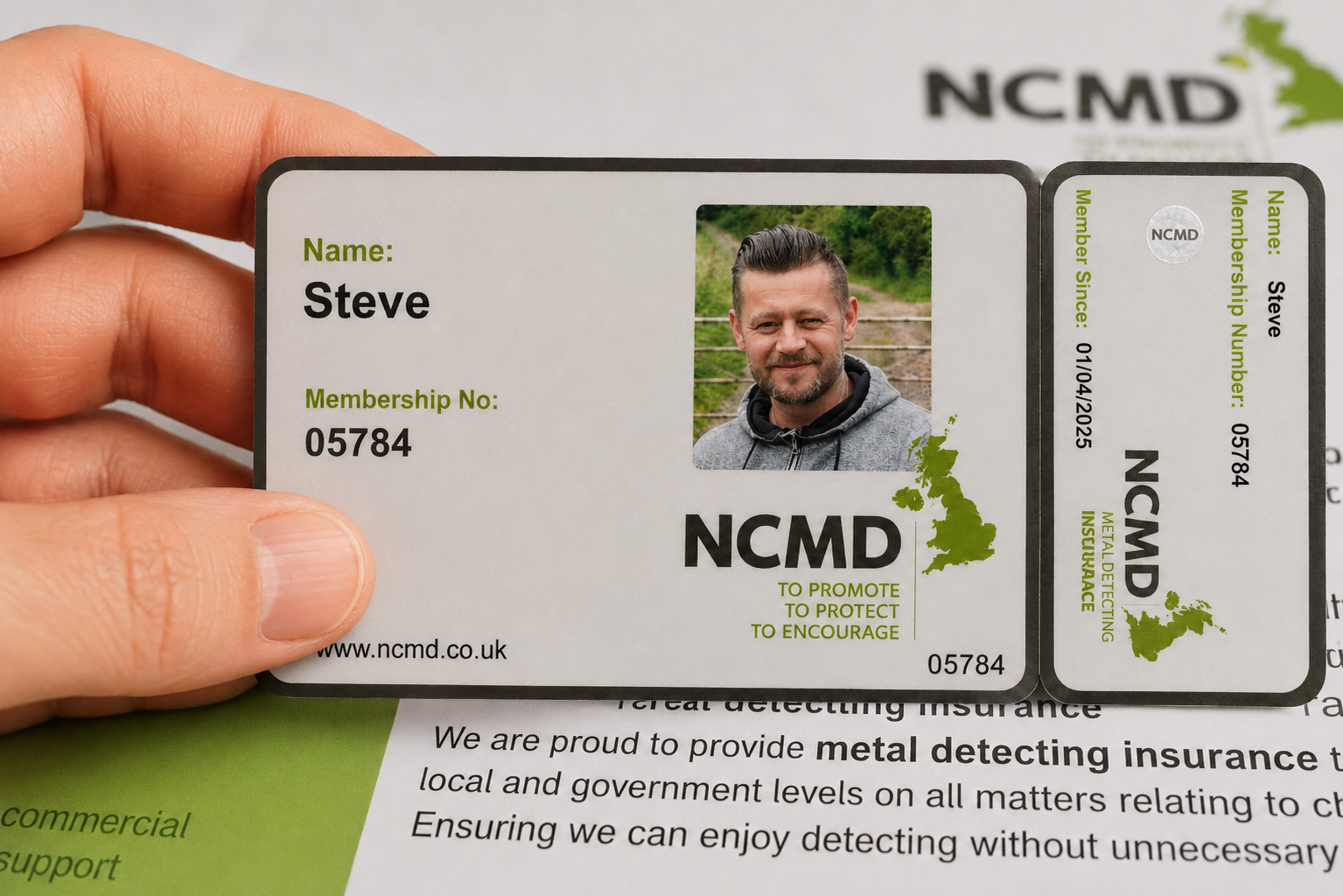
The two national bodies people usually look at are the National Council for Metal Detecting (NCMD) and the Federation of Independent Detectorists (FID). The NCMD currently describes public liability cover as part of its membership, subject to its terms. If you compare another organisation, check its current policy wording directly before relying on it.
| Option | What it is | Beginner note |
|---|---|---|
| NCMD | The National Council for Metal Detecting. Membership includes public liability insurance and access to member resources. | The common route for UK detectorists. Check the current membership price and cover details before joining. |
| FID | The Federation of Independent Detectorists. Another long-running organisation associated with detectorist membership and insurance. | Check current FID cover, membership cost and terms directly before relying on it. |
| Club membership | Some clubs require members to hold NCMD, FID or similar cover. | Ask the club what cover they require before attending digs. |
| Rally or event requirements | Organised digs may require proof of insurance before you can attend. | Do not assume you can turn up uninsured. Check the event rules first. |
I would not overcomplicate this as a beginner. Join a recognised detecting organisation, read the terms, save proof of membership, and keep it with you when asking for permission or attending digs.
What insurance does not do
This bit matters.
Insurance is useful, but it is not a magic permission slip.
Metal detecting insurance does not:
- Give you permission to detect on land.
- Allow you to detect scheduled monuments or restricted sites.
- Replace a finds agreement with the landowner.
- Override Treasure reporting rules.
- Cover careless, illegal or dishonest behaviour.
- Mean you can bring friends onto a permission without asking.
- Excuse leaving holes, damaging crops or ignoring livestock.
You still need to do things properly. Permission first, responsible detecting always.
What proof should you keep with you?
Once you have insurance or membership, make it easy to show.
This is especially useful when speaking to landowners, joining club digs, attending rallies, or if someone asks what you are doing on the land.
Keep these handy:
- Your digital membership card.
- A screenshot in case you have no signal.
- Your membership or policy number.
- A copy of your written permission or agreement.
- Landowner contact details if agreed.
- Emergency contact details, especially on remote permissions.
It takes two minutes to save these to your phone, and it makes you look much more organised.
Should beginners get metal detecting insurance?
Yes, I think they should.
Not because the law forces you to have it for every normal detecting situation, but because it is cheap, sensible and makes permission conversations easier.
If you can afford a detector, spade, finds pouch, pinpointer, fuel and a flask full of optimism, you can probably afford basic detecting membership with insurance. For the wider beginner picture, see our guide on what you need to start metal detecting.
It is one of those things where you hope you never need it, but you are glad it is there.
My simple advice:
Get insured before asking for private permissions. It gives you one less thing to worry about and one more reason for a landowner to take you seriously.
Summary: do you need insurance for metal detecting?
You do not generally need metal detecting insurance by law in the UK, but you should strongly consider it.
It helps protect you if something goes wrong, reassures landowners, may be required by clubs or rallies, and makes you look more responsible when asking for permission.
NCMD and FID are two well-known detectorist organisations people look at for membership and insurance, but always check the current cover, prices and terms before joining.
Insurance does not give you permission, does not override the law, and does not excuse poor behaviour. You still need to detect responsibly, fill holes, respect land, report important finds and follow the code of conduct.
Boring? A little bit. Worth having? Definitely.
Next beginner guide
Ready to ask for permission?
Insurance helps, but the way you ask matters too. Learn how to approach landowners properly and use a simple permission agreement.
FAQs about metal detecting insurance
Is metal detecting insurance legally required in the UK?
For ordinary hobby detecting, it is not generally a legal requirement. However, landowners, clubs, councils or organised digs may still require proof of public liability insurance before allowing you to detect.
Does insurance give me permission to metal detect?
No. Insurance does not give you permission. You still need permission from the landowner or the correct person before detecting.
What type of insurance do detectorists usually need?
Detectorists usually talk about public liability insurance. This may help if someone claims you caused damage or injury while detecting.
Does NCMD membership include insurance?
NCMD membership includes public liability insurance as part of its member benefits. Always check the current NCMD terms and cover details directly before relying on it.
What should I show a farmer when asking for permission?
Show your membership or insurance proof, explain that you follow the code of conduct, and make it clear you will detect only where agreed, fill holes properly and respect the land.
Can I metal detect without insurance?
In some situations, yes, but it is not ideal. Insurance is inexpensive, helps with permission, and shows you are serious about detecting responsibly.
Sources and further reading
Insurance requirements can vary between landowners, clubs, councils and policies. Check the current terms before relying on cover.
- NCMD Membership FAQs: Explains the public liability cover included with current NCMD membership, subject to its terms.
- NCMD Code of Conduct: Covers permission, responsible detecting and legal responsibilities.
- Public liability insurance: Independent insurance guidance on what public liability cover is designed to do.
- Warrington Council: Using a metal detector: Example of local rules that require permission and proof of public liability cover.
- GOV.UK: Report treasure, wreck material or archaeological finds: Confirms that insurance does not replace Treasure reporting or other legal duties.