Every now and then a find comes along that makes the whole hobby sit up. The Ilminster Ring is one of those. A gold Roman ring, dug from a Somerset field by an ordinary detectorist, has just been bought for the nation at £78,000, and it is now heading for a permanent home at the Museum of Somerset in Taunton. If you have ever swung a coil in the rain wondering whether it is all worth it, this is the story to keep in your back pocket.
What was actually found
The man behind it is Kevin Minto, a 68-year-old former soldier and lorry driver who, by his own account, took up detecting to keep fit. He had already pulled coins from the same field near Ilminster over the years, so he knew the ground had history in it. Then, back in 2018, a signal turned out to be something far bigger than another grotty penny.
“It was like being hit by an express train,” he told reporters, remembering the moment it dawned on him what he was holding. One of his detecting mates was apparently screaming that they were rich. Anyone who has had that once-in-a-lifetime signal will know the feeling, even if most of ours turn out to be a ring pull.
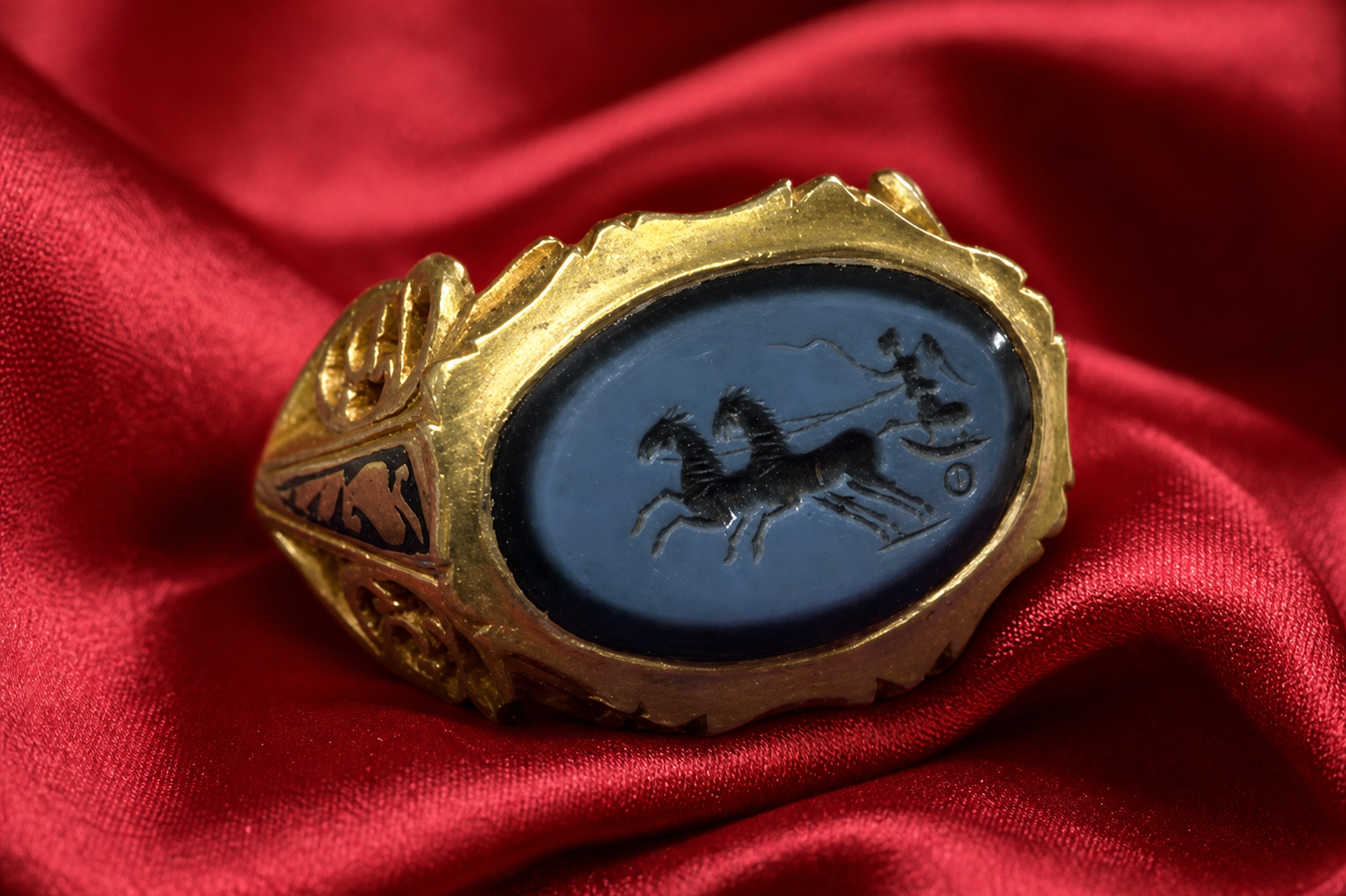
What he had lifted was a chunky gold ring dating to around AD 297. Set into it is an intaglio, a gemstone with a design engraved into its surface, showing Victoria, the Roman goddess of victory. You might know her better by her Greek name, Nike. She is shown riding a two-horse chariot, and the whole thing is beautifully done. The ring is unusually large and heavy for its age, weighing in at roughly 48 grams, which is a serious lump of gold by any standard. It was found alongside a hoard of nearly 300 Roman coins on the site.
Why the experts are excited
Gold is the headline, but it is the quality that has curators talking. Amal Khreisheh, senior curator at the South West Heritage Trust, called it “both large and heavy, with elaborate gold work and a beautifully executed intaglio.” She added that while other examples are known, this one is “only paralleled by continental discoveries.” In plain English, rings this good usually turn up on the Continent, not in a field in the West Country.
Most Romans wore rings of bronze or silver. A gold ring of this weight and craftsmanship points to someone of real standing, perhaps a governor, a wealthy merchant or a big landowner. Khreisheh reckons its burial around AD 297, as part of a group that also included coins, lead and pottery, sheds light on how South Somerset’s Roman population coped through a rocky stretch of unrest in the late third century. When people bury their best gold, something is usually going wrong above ground.
The bit detectorists should really pay attention to
Here is where the story gets useful rather than just glittery. Minto did it properly. The find went through the correct channels, and that is exactly why it has ended up in a museum with his name attached to it rather than quietly vanishing. If you are ever unsure how that side of things works, our explainer on what a Finds Liaison Officer does is worth five minutes of your time, because the FLO is your first port of call when something special comes out of the ground.
The other honest lesson is patience. Reports suggest the payment took around eight years to come through because of the legal process, so this was not an overnight windfall. Under the way treasure finds are handled, the reward was split fairly too. Half went to the landowner whose field it was, and Minto shared his portion with the detecting friend who was out with him. That landowner relationship matters. No permission, no dig, no ring, no reward. It is the quiet foundation the whole hobby stands on, and it is why it pays to know how to get permission to metal detect before you ever set foot in a field.
And the money did change his life in a modest, very British way. Minto has said the payout let him clear his mortgage and cut his lorry driving down to four days a week. No yachts, just a bit of breathing room and more time to get out in the fields.
Somerset does it again
If Somerset feels like it keeps producing the goods, that is because it does. This is the same county that gave us the Frome Hoard, more than 52,000 Roman coins lifted in 2010, and the Chew Valley Hoard of over 2,500 silver coins from the years around the Norman Conquest. Both now live at the Museum of Somerset, and the Ilminster Ring will join them. Before it settles into a display case, though, it is going on a little tour of local primary schools, which is a lovely touch. Getting kids to stand a foot away from real Roman gold is the sort of thing that creates the next generation of detectorists.
For the rest of us, the takeaway is simple. Keep asking for permission, keep reporting and recording your finds, and keep swinging. Most days it is buttons and shotgun caps. But every so often the ground gives up something that ends up behind museum glass with your name on the label, and that is a decent reason to get up early on a cold Sunday.
Sources
Reported by CBS News, Something About Rocks and Brit Brief, drawing on statements from the South West Heritage Trust. This is a Detectorist World summary written independently from the reporting above. See the linked articles for the original coverage and photographs.