Quick answer: A Finds Liaison Officer, usually shortened to FLO, is an archaeologist who helps identify and record archaeological objects discovered by members of the public. They are the main point of contact for detectorists who want to record an important find or report something that may qualify as Treasure. You can use our Finds Liaison Officer directory to find the FLO covering your area.
If you are new to metal detecting, you will probably hear people talking about sending a find to their FLO. This does not mean that you are handing the object over permanently or that you have done anything wrong.
An FLO is there to record archaeological information and help make sure that important discoveries are not lost from the historical record.
What Does FLO Stand For?
FLO stands for Finds Liaison Officer.
Finds Liaison Officers work as part of the Portable Antiquities Scheme, commonly known as the PAS. The scheme records archaeological objects discovered by detectorists, field walkers, gardeners and other members of the public in England and Wales.
The individual object may be interesting, but the exact location where it was found can be just as important. When thousands of finds are recorded together, archaeologists can begin to understand how an area was used and where people may have lived, worked or travelled in the past.
Suitable finds are added to the publicly accessible Portable Antiquities Scheme database, where they can be studied by archaeologists, museums, researchers and members of the public.
What Does a Finds Liaison Officer Do?
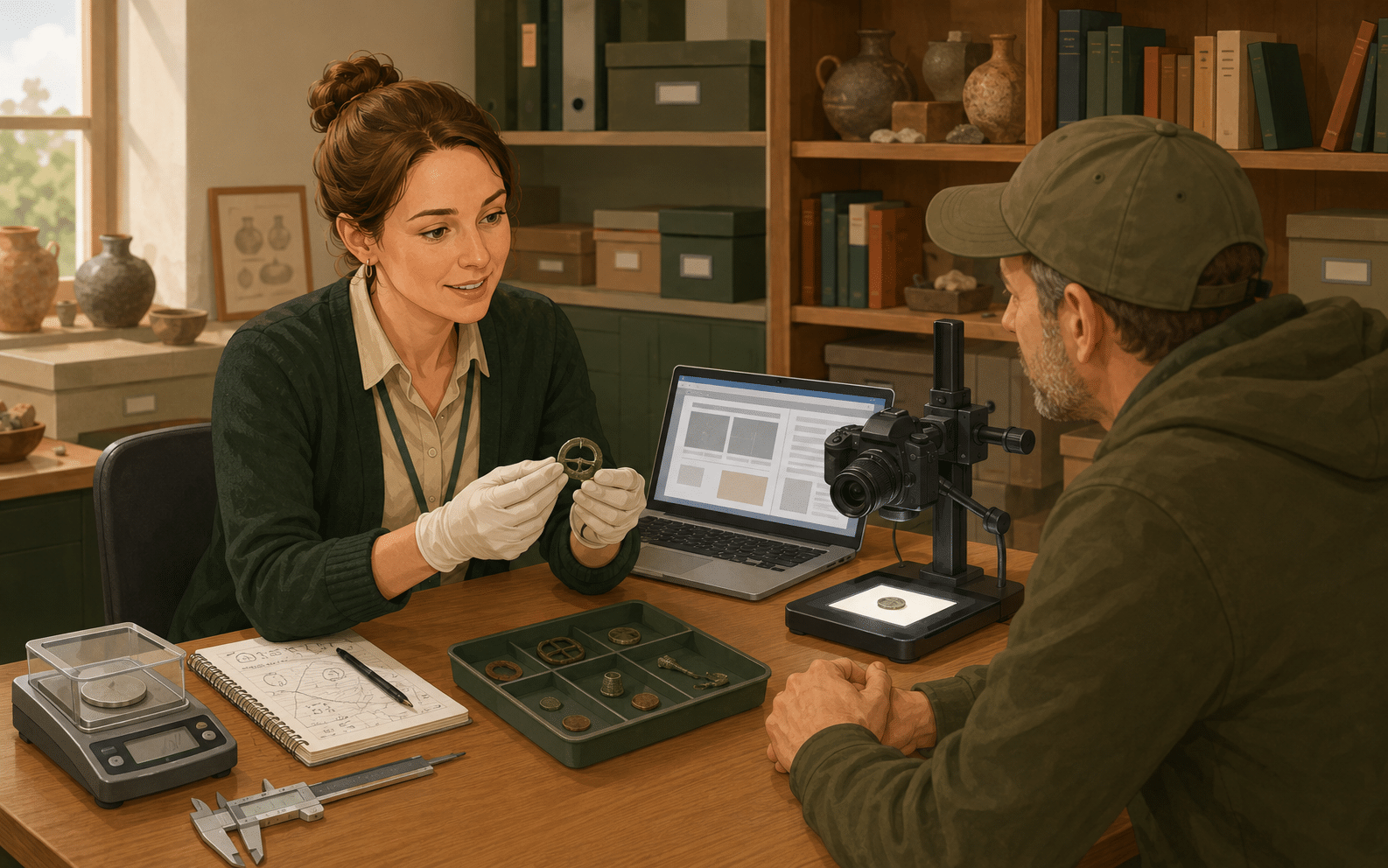
The work of an FLO can include:
- Identifying finds such as coins, buckles, brooches, tools, weights and other archaeological objects.
- Dating and describing objects using their archaeological knowledge and specialist reference material.
- Photographing and measuring finds that are suitable for recording.
- Recording the findspot and other discovery information.
- Adding suitable objects to the Portable Antiquities Scheme database so the information can be used by archaeologists, museums and researchers.
- Advising finders about potential Treasure and helping them through the reporting process.
- Working with metal-detecting clubs, museums and local archaeology services to encourage responsible recording.
They may also consult a National Finds Adviser or another specialist when an object is unusual or difficult to identify. If you want to have a go yourself first, our guide on how to identify metal detecting finds covers the websites, apps and reference sources that help.
Who Does a Finds Liaison Officer Work For?
Finds Liaison Officers are part of the wider Portable Antiquities Scheme network.
In England, the scheme is managed by the British Museum, but FLOs are generally employed locally through museums, councils and other archaeological or heritage organisations.
In Wales, the scheme is managed through Portable Antiquities Scheme Cymru, which works with museums and local partner organisations.
This is why your FLO may be based inside a museum, council archaeology service or heritage centre rather than at the British Museum itself.
Do You Have to Report Every Metal-Detecting Find?
No. You do not have to send every modern coin, button or unidentifiable piece of metal to your FLO.
Recording most non-Treasure archaeological finds through the Portable Antiquities Scheme is voluntary. However, objects that may meet the legal definition of Treasure must be reported within the required legal timeframe.
In England and Wales, potential Treasure must be reported within 14 days of finding it, or within 14 days of first realising that it may qualify as Treasure.
You can read our full guide to the UK metal-detecting laws and code of conduct for a broader explanation of permissions, protected land, reporting finds and responsible detecting.
You should also check the current official GOV.UK Treasure reporting guidance if you believe you have found something that may qualify.
If you are unsure whether something is recordable or may be Treasure, contact your FLO and ask. It is better to send a few clear photographs and the basic find details than to guess.
Scotland and Northern Ireland have different reporting systems and legal requirements. Finds made in Scotland should be reported through the Treasure Trove Unit. Northern Ireland has its own official guidance for archaeological finds and Treasure.
Will an FLO Keep Your Find?
Usually, no.
An FLO may need to borrow an object temporarily so that it can be examined, photographed and recorded properly. You should be given a receipt when an object is left with them.
Most ordinary recorded finds are returned once the recording process has been completed. Potential Treasure follows a separate legal process and may need to be held while it is assessed.
An FLO is also not normally there to provide a commercial valuation. Their main job is to identify and record the archaeological information connected to the find.
What Information Should You Give Your FLO?
When contacting an FLO, try to provide:
- Clear photographs of the front, back and edge of the object.
- Its measurements and weight, if possible.
- The date it was discovered.
- An accurate findspot or grid reference.
- Information about whether it was found alone or close to other objects.
- Any relevant details about the condition of the surrounding ground.
Do not aggressively clean an archaeological find before showing it to an FLO. Heavy cleaning can remove surface detail that may help with identification and dating, which is why our guide on how to clean finds safely mostly advises leaving anything old or unusual well alone.
Find Your Local Finds Liaison Officer
Use our Finds Liaison Officer directory to find the FLO covering your county or region.
Contact arrangements and appointment availability can vary, so check the individual listing before visiting. Your FLO can tell you whether they need to examine the object in person, whether photographs are enough for an initial assessment and what information you should provide.