The Yorkshire Museum has picked up a national award for its Melsonby Hoard exhibition, Chariots, Treasure and Power, recognising the way it brings one of Britain’s remarkable Iron Age discoveries to the public.
The museum announced the news on 5 October 2026, following recognition in the Exhibition, Display or Interpretation Project category of the Society for Museum Archaeology Awards for Excellence.
For anyone interested in metal detecting, archaeology or Britain’s ancient history, there’s more to this story than another trophy for a museum.
From a Detectorist’s Discovery to a Museum Exhibition
The Melsonby Hoard was discovered by metal detectorist Peter Heads in late December 2021, near Melsonby in North Yorkshire.
Dating from around the first century BC to the first century AD, the collection contains hundreds of objects connected with Iron Age life.
Durham University’s archaeological teams worked alongside the British Museum and Historic England to investigate, excavate and preserve the discovery.
Among the finds are vehicle fragments, horse harness fittings and weapons. These objects provide researchers with valuable clues about transport, warfare and the people who lived in Britain around 2,000 years ago.
It’s worth remembering that this isn’t a newly discovered hoard. The latest news concerns the award-winning exhibition and the ongoing work surrounding finds recovered several years ago.
Why the Exhibition Won Recognition
The exhibition opened on 15 May 2026 and takes visitors through the story of the discovery, excavation and conservation.
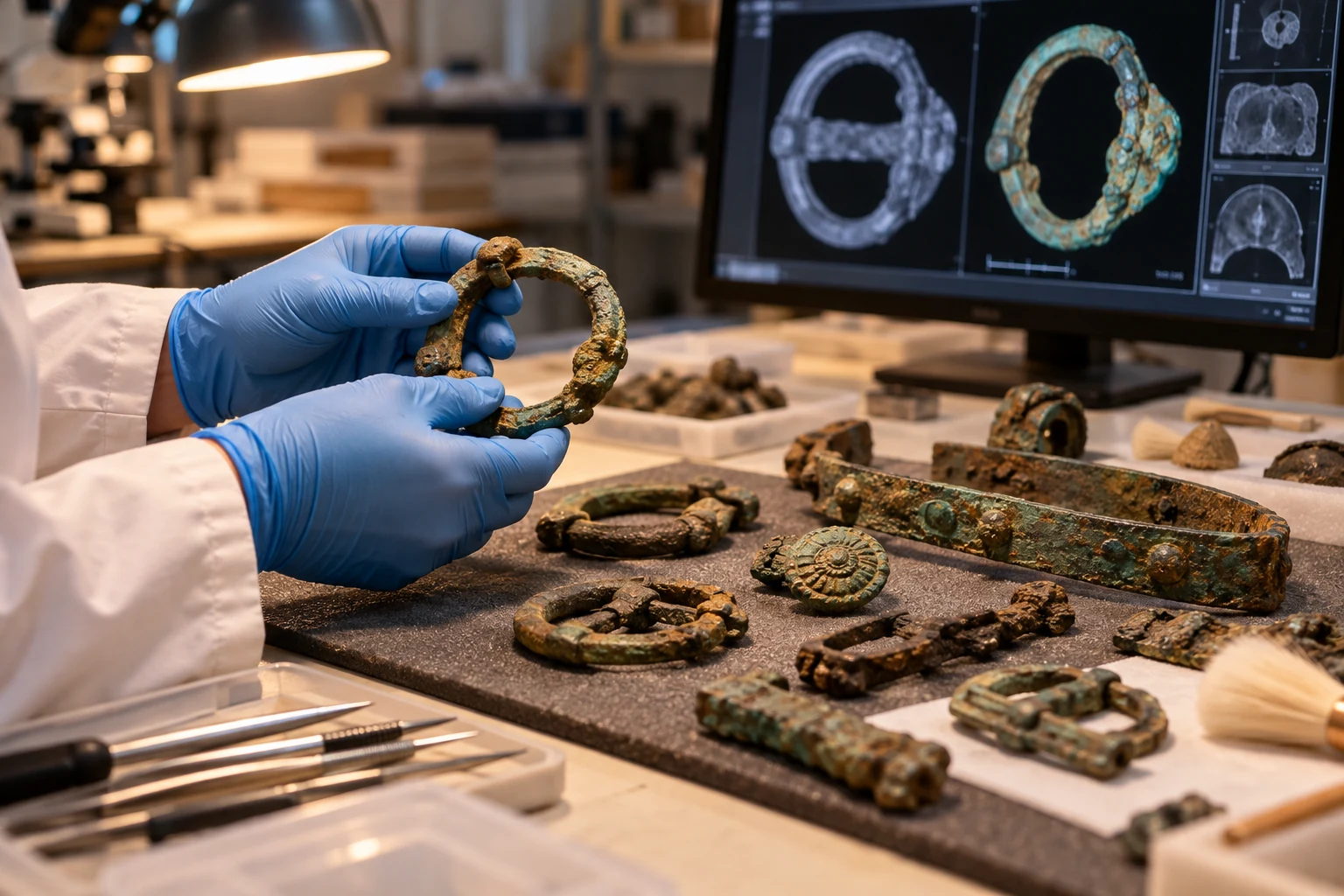
One particularly interesting decision was to display some objects before conservation was completed, allowing visitors to understand the condition in which ancient metalwork can survive underground.
The exhibition also explains how archaeologists examine fragile material and gradually uncover details that aren’t always obvious when something first comes out of the ground.
One example is The Block, a fused mass of archaeological material weighing over 150kg and measuring almost a metre across.
Rather than dismantling it, specialists have kept it intact, using CT and 3D scanning to investigate the fragments hidden inside.
Not everything recovered is on display. Some material remains too fragile or difficult to exhibit safely, while research continues.
More than 1,000 people supported the public fundraising campaign in 2025, helping make the exhibition possible.
What Detectorists Can Take From the Story
Discoveries like Melsonby are a reminder that finding an object is sometimes only the beginning of understanding it.
Where something is found, what surrounds it and how specialists examine it can all help piece together its history.
For beginners wondering who helps record archaeological discoveries, our guide to What is a Finds Liaison Officer (FLO)? explains the role and how FLOs fit into the recording process.
There’s still plenty researchers don’t know about Melsonby, including why objects were broken, burnt and buried.
If you enjoy Iron Age history, the exhibition is due to remain at the Yorkshire Museum until summer 2027.