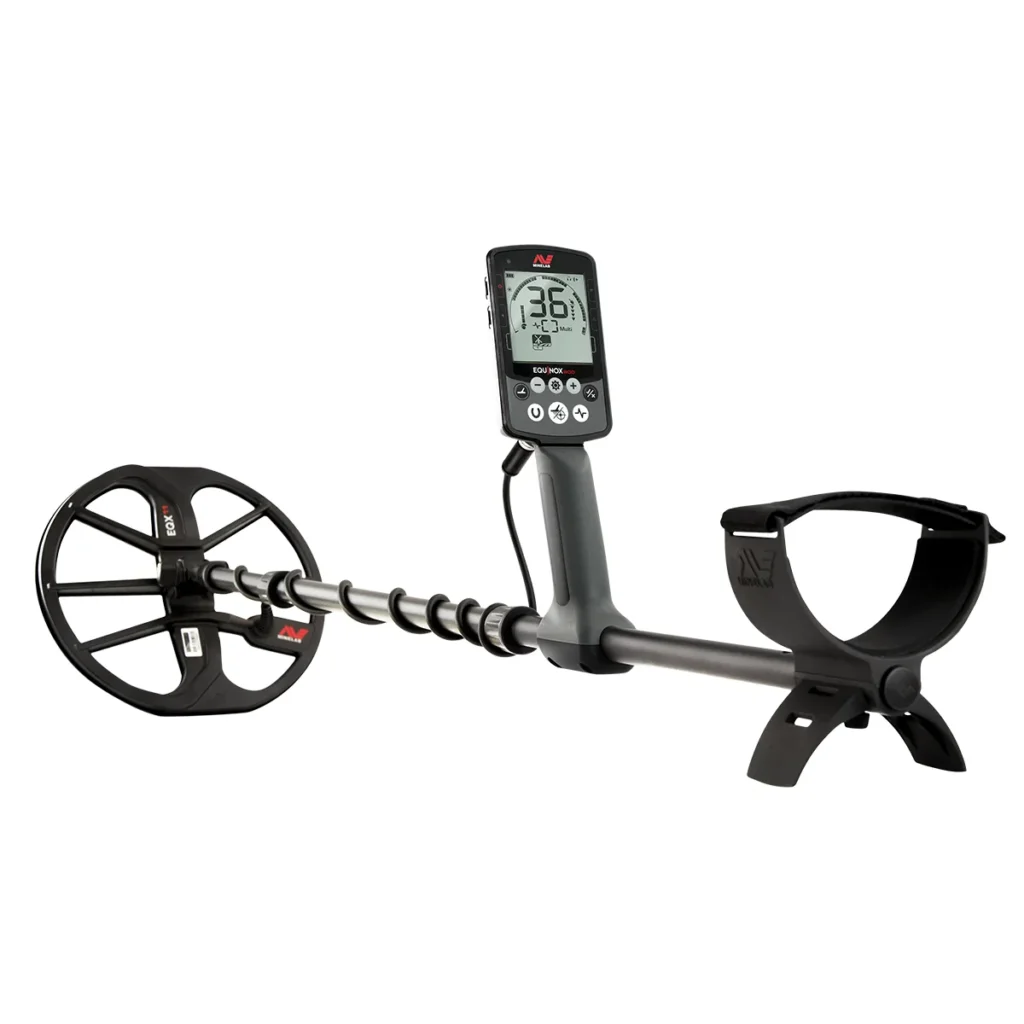

Minelab Equinox 800 Review
Review Overview
Let me be straight with you before we start
I have never owned an Equinox 800. It has never been on my arm in a field, and I am not going to pretend otherwise. My own machines have been a run of Garretts, a Minelab X-Terra 705 and the Nokta Simplex I still swear by, and I only write first-hand about kit I have actually lived with.
So this is a different kind of review, and honestly one the hobby needs more of. The 800 might be the most owned, most filmed and most argued-over detector of the last decade, so there is a genuine mountain of long-term experience out there. I have gone through years of forum threads, Reddit posts, long-term owner write-ups and the YouTube field-testers who actually run a machine for a couple of seasons before judging it, not the ones reading the box on day one. What follows is my honest attempt to boil all of that down: where the community has really landed, praise and gripes, with the marketing peeled off.
Why everyone still bangs on about an eight-year-old detector
You have to remember what the Equinox did when it landed to understand why people are still talking about it in 2026. It dragged proper simultaneous multi-frequency, Minelab’s Multi-IQ, down to a price an ordinary detectorist could actually reach. Before that, multi-frequency basically meant a big, heavy, expensive machine. The Equinox put it in a sub-1.4kg all-rounder you could take from a Roman pasture field one morning to a salt beach that afternoon without owning two detectors. That is the whole point of the thing, and it is still the first word out of most owners’ mouths.
What owners genuinely rave about, and why it matters
If you read enough threads, the same word comes up before any other: separation. And this is where it gets interesting, because separation is one of those specs that sounds boring on paper and turns out to be everything in the dirt.
Here is why detectorists care so much. On an old site, your good targets are rarely sitting in clean ground. A hammered coin is jammed up against an iron nail, a Roman grot is hiding next to a bit of buckshot, and a lesser machine just blends those two signals into one ugly grunt and you walk straight over the silver. The Equinox, by broad agreement, is brilliant at pulling one target out from beside another. The trick long-term users describe again and again is nudging the centre of your swing slightly when two targets are close and listening for the good tone to pop out on its own. People who have run one for years say they can almost read the ground by ear. That ability to carve up trashy, iron-infested ground is the single most praised thing about the machine, and it is exactly why detectorists who could afford anything still grab the Nox for the really rubbishy permissions.
Tied right into that is recovery speed, and it is worth explaining why it matters rather than just nodding at it. Recovery speed is how fast the detector resets after one target before it can hear the next. Run it too slow in trashy ground and two close targets smear into a single signal, so you miss the good one sitting next to the junk. The 800 lets you wind that recovery speed up, where the cheaper 600 does not give you the same control, and that is a big part of how it stays clean in the rubbish. Most experienced owners agree that being able to tune recovery and Iron Bias to the site, rather than fighting a fixed setting, is what really separates the 800 from cheaper machines.
On depth, the consensus from serious users is a coin-sized target at roughly eight to ten inches in decent ground on the standard 11-inch coil, and noticeably more with the big 15-inch coil, where experienced hands report reaching into the thirteen-to-fourteen-inch range on a good day. The usual caveats apply, because ground conditions, target size and how the thing is lying change everything, but the short version is that this is a genuinely deep machine for the money.
How it actually behaves on UK ground
For our kind of detecting the picture is mostly very good, with one honest caveat I will come to. On pasture and ploughed fields the Equinox is a real performer, and most UK users seem to live in Field 1 and Field 2 modes. The Multi-IQ engine gives it a stability and a target-ID edge over the older single-frequency machines a lot of us cut our teeth on, which in plain terms means the number on the screen lies to you less often.
On ground balance, the common UK advice is to keep it simple. Our soil is generally kind compared with the brutal mineralised stuff abroad, and Minelab themselves steer most users to a ground balance of zero. In multi-frequency it barely moves the needle anyway, though some owners reckon balancing carefully squeezes out the last fraction of an inch.
Now the caveat, and personally this is the thing I would want to know before buying. The Equinox can be a chatty, falsing machine on awkward ground. Drop it on a field full of small hot rocks or heavy mineralisation and it will light up and natter at you, and you have to put the work in with noise cancel, sensitivity and your channel to settle it down. I have seen this mentioned so many times now that it is clearly not a one-off. It rewards a detectorist who learns to tune it and frustrates one who expects to switch on and wander. Worth knowing, not a dealbreaker.
On the beach it is, by pretty broad agreement, the standard everything else gets measured against. The Beach modes are built for salt sand and being submersible lets you work the wet and into the wash. The one recurring grumble is moving sand under the water, but that troubles most detectors, not just this one.
The gripes that come up again and again
No detector is all sunshine, and if a review is going to be worth reading it has to tell you the bad with the good. The Equinox has a handful of genuinely well-documented weak spots, and I would not be doing my job if I glossed over them.
The big one is build quality around water. It is sold as submersible, and plenty of people dunk theirs for years with no bother, but flooded control boxes come up often enough to be a real talking point rather than a freak event. If your detecting is going to be mostly underwater, go in with your eyes open.
The original shaft is the other classic complaint. The lower section has a habit of seizing solid after a season or two of grit and use, to the point where you cannot adjust it anymore. It is common enough that a whole cottage industry of aftermarket carbon shafts grew up just to fix it, which tells you everything.
Then there is the battery, and this one would genuinely give me pause. It is a sealed rechargeable unit you cannot swap in the field, and like all such batteries it degrades. Long-term users two and three years in report the machine going twitchy once the charge drops toward the last bar or two, and you cannot just slap in a spare set of AAs to limp through the rest of the day. The quoted twelve hours is fine when the battery is healthy, but it has a shelf life and it is something you plan a day around rather than forget about.
The exposed magnetic charging port is a smaller niggle but a real one. Left open it collects grit, salt and damp, and “my Equinox suddenly will not charge” is one of the most worn-out thread titles on the forums. The fix is cheap, which I will get to.
If I were buying one, here is what I would actually do
This is the bit most reviews skip, so let me be useful. On accessories genuinely worth the money, a magnetic charge-port protector comes first every time. It is a couple of quid and it heads off the single most common fault on the machine, so fitting one from day one is a no-brainer. After that, the coil you add depends on your ground: the little 6-inch is the one owners reach for in proper trash and tight spots because it separates even better than the stock 11, while the 15-inch is the depth-and-coverage option for open fields and the beach. If your stock shaft has seized, an aftermarket carbon shaft is not just a repair, most owners reckon it is a genuine upgrade in feel and weight. A simple screen protector is cheap insurance too.
On the mistakes owners make, the big one is buying it expecting to switch on and dig silver on day one. It does not work like that, and people who skip the learning end up blaming the machine. The other is running sensitivity flat out because it sounds powerful, when on chattery UK ground backing it off and running a clean, quiet machine will genuinely find you more, because you can actually hear the subtle deep signals instead of drowning them in falsing.
Buying one used in 2026? Check these before you hand over cash
- It powers up and holds a stable threshold indoors rather than chattering wildly.
- The wireless headphones pair there and then, because the WM08 module is part of the package and a faff to replace.
- The lower shaft still adjusts and has not seized solid.
- It actually charges, given the well-known port issues. Take the charger and try it.
- Ask what firmware it is on, then update it to the latest before you judge it.
- Have a quick look at the coil ear and connector for cracks or wear.
Reliability over the long haul, and the firmware that changed minds
Set those weak points aside and the core of the machine has a strong reputation for going the distance. The electronics and the actual detecting performance hold up well over years, which is the whole reason so many are still in daily use long after being discontinued. Long-term users generally report that once you have dodged the known niggles, the thing just keeps detecting.
It is also worth knowing Minelab kept improving it, because this matters when you buy used. The Equinox got a run of firmware updates across its life, and the 3.0 update is the notable one. It added a 4kHz single frequency aimed at large, deep targets, alongside behind-the-scenes stability work that cut false signals and tightened up the target ID. One thing I would absolutely do with a secondhand machine is get it onto the latest firmware before judging it, because by most accounts it genuinely changes how the detector behaves.
The learning curve is real, and that is the honest truth
If there is one thing the whole community agrees on, it is that this is not a switch-on-and-go machine if you want the best from it. Between the modes, recovery speed, Iron Bias, sensitivity and the tone options, there is a lot to get your head around, and most owners reckon it takes a good few months of regular use before it properly clicks. That is not really a criticism, more a warning about expectations. Plenty of beginners have started on one and done perfectly well in the simple modes, but understand that you are buying a machine you grow into, not one you master over a weekend.
Does it still make sense in 2026?
This is the question that actually matters now, because the Equinox 800 has been discontinued. Minelab replaced it with the Equinox 700 and 900 back in 2023 and put the Manticore above them. So why is anyone still recommending the old one? Simple: the used value has become very hard to argue with. With the 800 out of production, secondhand prices have dropped a long way, and you are getting a machine that was the benchmark for years for a fraction of what it cost new.
And here is the honest bit on whether you should just spend the extra on the newer 900 instead. The 900 is a nice refinement rather than a revolution. It brings a carbon-fibre shaft that finally kills the old seizing problem, a deeper 5-metre waterproof rating and slightly wider discrimination and sensitivity ranges, but the Multi-IQ core actually doing the detecting is much the same. The settled advice across the community is telling, and it is the advice I would give too: if you already own an 800, do not waste money jumping to a 900, and if you are buying used and watching the pennies, the 800 is still a tremendous amount of detector. If you want the fixed shaft and the extra polish and you are buying new anyway, that is the case for the 900, not some huge leap in finding power.
It is not unchallenged, mind. The Nokta Legend undercut it on value and throws in extras, and the XP Deus 2 generally gets the nod for outright capability and lighter weight if your budget stretches there. But neither has knocked the Equinox out of the conversation, which says a lot about how good the original was.
| What you care about most | The honest steer |
|---|---|
| Maximum value in 2026 | A used, fully-updated Equinox 800 is very hard to beat |
| Curing the seizing shaft and a bit more polish | Equinox 900 (same core, refined hardware) |
| Stretching the budget for top capability | XP Deus 2 (lighter, very strong, pricier) |
| Most kit for the money brand-new | Nokta Legend |
Who I would point towards it, and who I would steer away
If you are an improving detectorist who has outgrown a simple machine and wants one detector that does fields, beach and the odd bit of everything without buying two, this is still one of the smartest buys in the hobby, especially used. If you mainly hunt trashy, iron-heavy sites and you are willing to learn the settings, it will reward you.
Who I would steer away? A complete beginner who wants to switch on and go and has no patience for a learning curve would honestly be happier, and less skint, starting on something like a Simplex. And anyone whose detecting is almost entirely deep underwater work might want to think hard about those flooding reports before committing.
Community Verdict
After ploughing through years of owner opinion, the verdict is remarkably consistent, so here is the takeaway if you read nothing else. The Equinox 800 has aged genuinely well. The consensus appears to be that it remains a brilliant, versatile detector whose separation and all-terrain ability still stand up against machines released years later, which is why owners are so reluctant to part with theirs.
It is better bought used than new now, both because it is discontinued and because the secondhand pricing has made it a bargain for the performance. Overshadowed? On paper by the 900, the Manticore and the Deus 2, but in real-world finding most long-term users will tell you the gap is far smaller than the price difference. The most telling thing of all is how many owners, asked if they would buy another, say yes without hesitation, niggles and all. That is about the strongest recommendation a piece of kit can get.
And remember, this is me handing on the collected wisdom of people who have actually put the years in, not my own field notes. If you have run an Equinox 800 yourself and reckon I have got any of this wrong, drop me a line through the contact page. The site is always better for being corrected.
Full Specifications
Pros & Cons
👍 What We Like
- ✓All-environment excellence
- ✓Beach 2 and Gold modes
- ✓User-adjustable recovery speed
- ✓Iron Bias control
- ✓Fully submersible to 3m
- ✓Multi-frequency and single-frequency options
👎 Watch Out For
- ✗12-hour rechargeable battery requires planning
- ✗Significant learning curve to unlock full potential
- ✗Expensive but worth it
How It Performs
A top-tier performer and one of the best metal detectors money can buy. Best suited to advanced-level detectorists focused on coins, relics, beach, gold, all-purpose.
Last reviewed: 2026-05-24
Affiliate disclosure: we may earn a commission at no extra cost to you. Reviews stay independent.
Minelab Equinox 800: Owner's Reference and Setup
The practical detail behind the review: the coils that fit, how to update it, sensible starting settings and the questions owners ask most. Checked against Minelab's own listings and the wider owner community.
Best accessories for the Minelab Equinox 800
- Waterproof 3.5 mm Equinox headphones The ones to have if you work wet sand or wade, since the standard wireless link is not for submerging.
- A charge-port protector The exposed magnetic charging port collects grit and damp, and a cheap cover heads off the most common family fault.
- A smaller coil Cheap protection for the stock coil.
- A skid plate (coil cover) Cheap protection for the stock coil.
Coils that fit the Minelab Equinox 800
| Coil | Type | Best for |
|---|---|---|
| EQX 06 | 6 in DD | Trashy ground and tight separation |
| EQX 11 | 11 in DD | The stock all-rounder |
| EQX 15 | 15 x 12 in DD | Depth and coverage on open ground |
The Equinox 600 and 800 share the same coil ecosystem. Coiltek also make aftermarket NOX coils (commonly 10 x 5, 14 x 9 and 15 inch). Check any coil is listed for the Equinox before buying.
Headphones and audio for the Minelab Equinox 800
The 800 supports wireless audio and takes wired headphones too. Minelab list waterproof 3.5 mm Equinox headphones for anyone working the wet sand or the water.
Best settings for the Minelab Equinox 800
- For UK pasture, start in Field 1 or Field 2; for wet sand, start in Beach.
- Run Noise Cancel when you arrive at a site, and ground balance where the soil is variable.
- Use a higher recovery speed in trash and a lower one when chasing depth on cleaner ground.
- Keep sensitivity stable rather than maxed, and change one thing at a time while you learn it.
Firmware and manuals for the Minelab Equinox 800
The Equinox 800 is software-updateable through Minelab's updater. Update 3.0 (July 2020) added a 4 kHz single frequency to both the 600 and 800. Check Minelab's software page for the current updater and supported operating systems before you update.
Minelab host the Equinox manual and updater in their Product Downloads and Manuals area. Grab the version that matches your machine before you dig into the advanced settings.
View the manualMinelab Equinox 800: common questions
Is the Equinox 800 waterproof?
Yes, Minelab list it as submersible to 3 metres, so wet sand and wading are fine.
What does the Equinox 800 add over the 600?
More recovery-speed range (1 to 8 versus 1 to 3), Gold mode and the higher 20 and 40 kHz frequencies, plus finer audio control. Many coin and beach hunters manage happily on the 600.
Is the Equinox 800 still worth buying used?
Often yes, but check the coil ears, the charging contacts, the shaft and any history of water use.
More detectors and guides
Compare it head to head in Minelab Equinox 800 vs XP Deus and Minelab Equinox 800 vs Nokta Legend. Or browse other Minelab machines like Minelab Equinox 600, Minelab X-Terra Pro and Minelab Manticore. Read the Minelab range in full, or open the detecting glossary for plain-English explanations of ground balance, notch discrimination and depth.