Minelab Equinox 600 Review
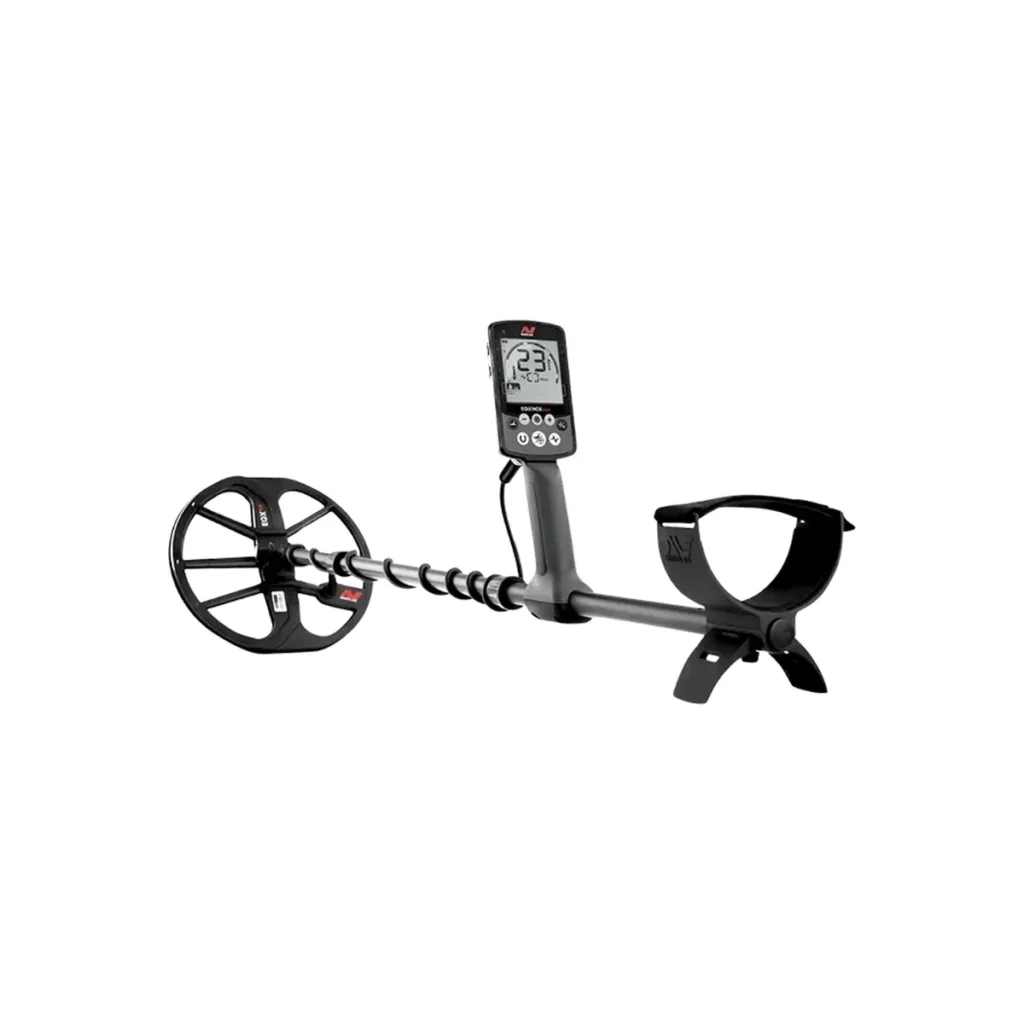
Minelab Equinox 600 Review
Is This Detector Right For You?
The Full Review
A quick honest word first
I have never owned an Equinox 600. My own multi-frequency days were on a Minelab X-Terra 705, which is a different beast, and I only write first-hand about machines I have actually used. So this is a research-based review: a summary of what the wider community has settled on after years of swinging the cheaper Equinox, pulled from long-term owner threads, forums, Reddit and the field-testers worth listening to. It is a popular machine with plenty of opinion behind it, so there is a lot to draw on.
The detector that put multi-frequency in reach
To understand the 600 you have to remember what the Equinox did when it arrived in 2018. It dragged proper simultaneous multi-frequency, Minelab’s Multi-IQ, down to a price an ordinary detectorist could actually reach. Before that, multi-frequency basically meant a big, expensive machine. The 600 was the cheaper of the two Equinox models, and its whole job was to be the affordable way into that technology. For a lot of people it was their first taste of a detector that could genuinely do fields one day and a salt beach the next without owning two machines.
What you actually give up against the 800 (and what you do not)
This is the question everyone asks, so let me answer it properly, because it is more reassuring than people expect. The single most important thing the community agrees on is this: set the two machines up identically, in the same ground, and the 600 finds what the 800 finds. The detecting engine is the same. The 600 is not a crippled, watered-down version. What you lose is control and options, not raw ability on the vast majority of targets.
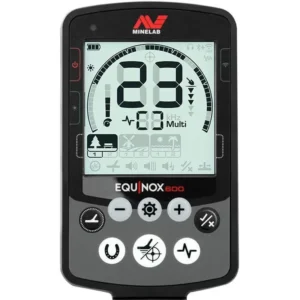
So what do you actually lose? The 600 runs three frequencies (5, 10 and 15 kHz) where the 800 adds a 20 and a 40 kHz, which mostly matters for tiny low-conductors and gold. It has three search modes (Park, Field and Beach) and no Gold mode. It gives you three recovery-speed settings against the 800’s eight. Ground balance is automatic only, with no manual override, and noise cancel is automatic only, with no manual channel select. The backlight is just on or off, and you get wired headphones rather than the wireless WM08 module.
Here is why a couple of those matter in the dirt, because it is not just a spec list. Recovery speed is how fast the machine resets after one target before it can hear the next. On trashy, iron-heavy ground a higher recovery speed stops two close targets smearing into a single signal, which is exactly how a good coin hides next to a nail. The 800’s wider range gives you more room to tune for that, and on really rubbishy sites the 600’s three steps can feel limiting. Manual noise cancel is the other one: near power lines or other detectors, hand-picking a quiet channel can settle a chattery machine that the automatic setting cannot quite calm. For most ordinary detecting on reasonable ground, though, neither will cost you finds.
What owners genuinely value
Value is the word that comes up before any other, and it is earned. The 600 gave people the famous Equinox strengths at the lower price: the separation and stability that made the family’s name. Separation is the one that matters most on our old sites, because a good machine pulls a hammered coin out from beside an iron nail instead of blending the two into one ugly grunt and walking you past the silver. Owners generally report the 600 does that job well, which is remarkable at the money. It is light, it is genuinely capable across fields and beach, and being submersible means you can work the wet sand and into the edge of the water.
The gripes, which are mostly family traits
The 600 shares the Equinox family’s well-known weak spots, so go in knowing them. The lower shaft has a habit of seizing solid after a season or two of grit, to the point a whole cottage industry of aftermarket carbon shafts grew up to fix it. The battery is a sealed rechargeable you cannot swap in the field, so no slapping in a spare set of AAs to limp through the day. The exposed magnetic charging port collects grit and damp, and “my Equinox will not charge” is one of the most worn-out thread titles going. And like its bigger brother, it can be a chatty machine on hot, mineralised ground that needs settling with sensitivity. None of these are dealbreakers, but they are real, and they are worth a few quid of cheap fixes.
If I were buying one, here is what I would do
The single best accessory is the cheap magnetic charge-port protector, because it heads off the most common fault on the whole family for a couple of quid. If your stock shaft has seized, an aftermarket carbon shaft is as much an upgrade in feel as a repair. And the classic owner mistake applies here too: do not run sensitivity flat out because it sounds powerful. On chattery UK ground, backing it off and running a clean, quiet machine genuinely finds you more, because you can actually hear the faint deep signals instead of drowning them in falsing.
Buying one used in 2026? Check these before you hand over cash
- It powers up and holds a stable threshold indoors rather than chattering wildly.
- The lower shaft still adjusts and has not seized solid.
- It actually charges, given the known port issues. Take the charger and try it.
- Ask what firmware it is on, then update it before you judge it.
- Have a quick look at the coil ear and connector for cracks or wear.
Who I would point towards it, and who I would steer away
If you are a beginner or working to a budget and you want real simultaneous multi-frequency without paying flagship money, a used 600 is one of the smartest buys in the hobby. It does the everyday detecting most of us actually do, and it does it with the same core engine as machines costing far more. If you want one detector for general field and beach work and you are not chasing the last fraction of a percent, it will not let you down.
Who I would steer away? The serious detectorist who lives on trashy, iron-infested ground and wants to tune recovery speed and noise cancel by hand would be happier on a used 800, which gives that extra control for not a lot more money secondhand. And anyone who fancies chasing tiny gold or prospecting should note there is no Gold mode here.
Is it still worth it in 2026, and what about the 700?
This is where it gets practical, because the 600 has been discontinued. Minelab replaced the 600 and 800 with the Equinox 700 and 900 back in 2022, so you are now buying the 600 used. The successor, the 700, is the one to weigh up if you are buying new: it brings a collapsible carbon-fibre shaft that finally kills the old seizing problem, a deeper 5-metre waterproof rating, more target-ID segments, an added 4 kHz frequency, wireless headphones, vibration alerts and a flashlight, all in a lighter package, for around £749 new. That is a proper step up in hardware rather than detecting power.
So the honest steer is this. If you are buying new, the 700 is the sensible modern choice over hunting down a 600. If you are buying used and watching the pennies, a cheap 600 is a tremendous amount of multi-frequency detector and a brilliant first machine. The only wrinkle is that used 800s have dropped so far that the extra control they give can be worth the small premium over a used 600. Work out whether you will ever use that control, and buy accordingly.
Community Verdict
The settled view is that the Equinox 600 is one of the best-value detectors the hobby has seen, because it put genuine multi-frequency within reach and gave up far less to the 800 than the price gap suggested. Has it aged well? The detecting has, but the hardware niggles, the seizing shaft and the sealed battery, are exactly what the newer 700 was designed to fix. It has to be better bought used than new now, since it is discontinued, and the used prices make it a genuine bargain. Overshadowed? On paper by the 700, but in real-world finding most owners will tell you a tidy, updated 600 with the charge port protected still does a proper job. For a beginner or a budget buyer wanting real multi-frequency, the community recommendation is clear: a cheap, sorted 600 is hard to argue with.
As ever, this is me passing on what years of owners have worked out, not my own field notes on this particular machine. If you have run an Equinox 600 and see it differently, drop me a line through the contact page.
👍 Strengths
- ✓Fully submersible to 3m
- ✓Multi-IQ simultaneous multi-frequency
- ✓Wireless audio built-in
- ✓Excellent beach performance
- ✓Upgradeable with aftermarket coils
👎 Compromises
- ✗No Beach 2 mode (present on 800)
- ✗No user profiles
- ✗Less customisable than Equinox 800
- ✗Rechargeable battery (can't use AA in emergency)
Key Specifications
An excellent all-round detector that punches well above its price. Best suited to intermediate-level detectorists focused on coins, relics, beach, all-purpose.
Last reviewed: 2026-05-24
Affiliate disclosure: we may earn a commission at no extra cost to you. Our reviews stay independent.
Minelab Equinox 600: Owner's Reference and Setup
The practical detail to go with the review: the coils that fit, how it updates, sensible starting settings and the questions owners ask most. Checked against Minelab's own listings and the wider owner community.
Best accessories for the Minelab Equinox 600
- A charge-port protector A couple of quid that heads off the family's most common fault, the grit-prone magnetic charging port.
- Waterproof 3.5 mm Equinox headphones For wet-sand and wading work.
- A smaller coil If the stock lower shaft seizes (a known family niggle), this is as much an upgrade in feel as a repair.
- An aftermarket carbon shaft If the stock lower shaft seizes (a known family niggle), this is as much an upgrade in feel as a repair.
Coils that fit the Minelab Equinox 600
| Coil | Type | Best for |
|---|---|---|
| EQX 06 | 6 in DD | Trashy ground and tight separation |
| EQX 11 | 11 in DD | The stock all-rounder |
| EQX 15 | 15 x 12 in DD | Depth and coverage on open ground |
The 600 shares the full Equinox coil ecosystem with the 800. Coiltek make aftermarket NOX coils (commonly 10 x 5, 14 x 9 and 15 inch). Check any coil names the Equinox before buying.
Headphones and audio for the Minelab Equinox 600
The 600 supports wireless audio and wired headphones. Minelab list waterproof 3.5 mm Equinox headphones for beach and water work.
Best settings for the Minelab Equinox 600
- Start in Field 1 or Park 1 for coins and pasture; use Beach on wet salt sand.
- Run Noise Cancel when you arrive, and ground balance where the soil is variable.
- Reduce sensitivity if the machine gets noisy rather than fighting the falsing.
- Learn a target from more than one sweep direction before you dig it or reject it.
Firmware and manuals for the Minelab Equinox 600
The 600 is software-updateable through Minelab's updater. Update 3.0 (July 2020) added a 4 kHz single frequency to both the 600 and 800. Check Minelab's software page for the current updater and supported operating systems before updating.
Minelab host the manual and updater in their Product Downloads and Manuals area. Grab the version that matches your machine.
View the manualMinelab Equinox 600: common questions
Is the Equinox 600 waterproof?
Yes, Minelab list it as submersible to 3 metres.
What does the Equinox 600 lack versus the 800?
Gold mode, more recovery-speed range (it has 1 to 3 versus the 800's 1 to 8) and the higher single frequencies and finer audio options.
Is the Equinox 600 still a good buy in 2026?
Yes for all-round coin, relic and beach work, though it is worth comparing used prices against the newer Equinox 700 and the Nokta Legend.
More detectors and guides
Compare it head to head in Minelab Equinox 600 vs Nokta Legend and Minelab Equinox 600 vs Minelab Vanquish 540. Or browse other Minelab machines like Minelab Equinox 800, Minelab X-Terra Pro and Minelab Manticore. Read the Minelab range in full, or open the detecting glossary for plain-English explanations of ground balance, target ID and discrimination.