Garrett AT Max Review
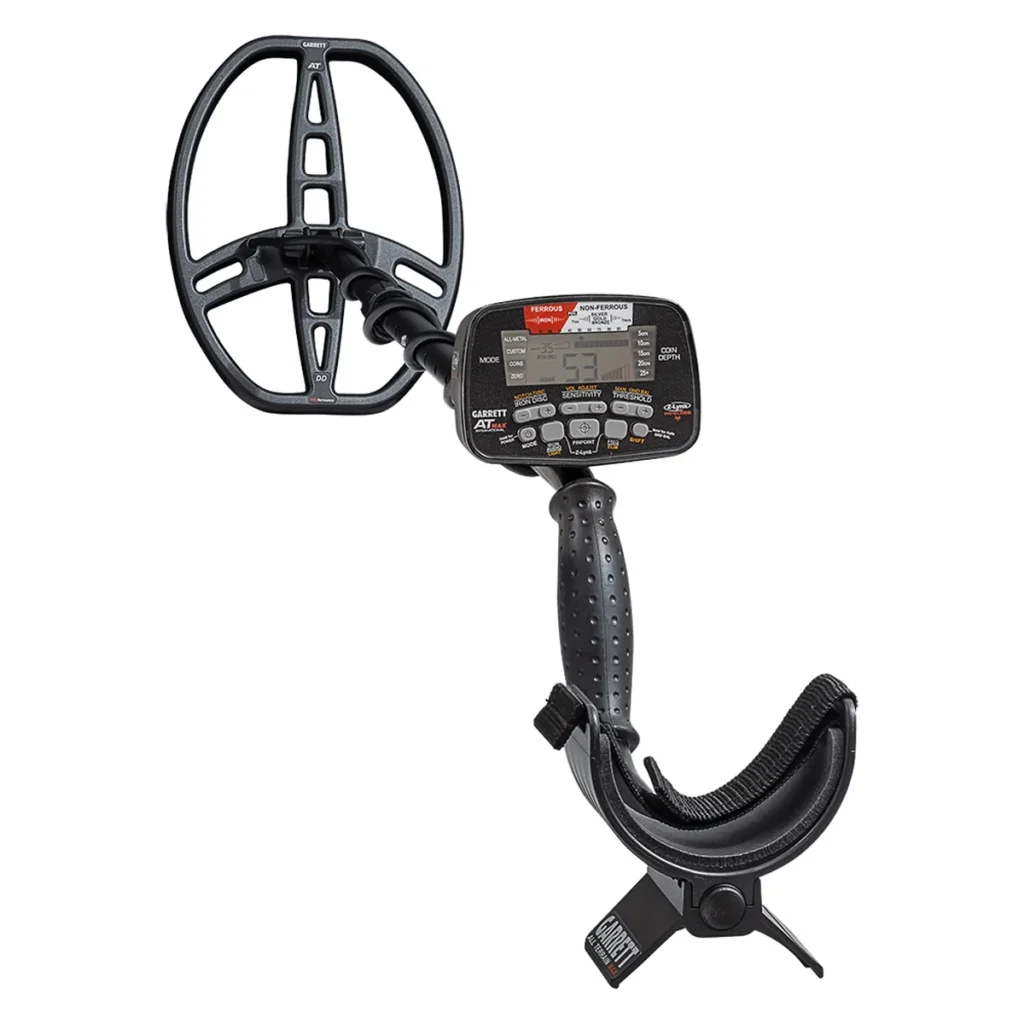
Garrett AT Max Review
Is This Detector Right For You?
The Full Review
Let me be straight before we start
I have owned a string of Garretts over the years, the Ace 150, the 250 and the Euro Ace, but the AT Max was never one of mine. So this is not a first-hand review. It is my honest attempt to boil down the wider community’s experience, pulled from years of forum threads, long-term owner write-ups and the field-testers who actually run a machine for a season or two before passing judgement.
The AT Pro with the annoyances sanded off
The quickest way to understand the AT Max is to picture the much-loved AT Pro with its two most-complained-about faults fixed. Garrett launched the Max in 2017 as the top of the AT, the All Terrain line, and it kept everything that made the Pro a workhorse, the toughness and the proper waterproofing, while finally adding wireless audio and a backlit screen. It runs a single frequency of 13.6 kHz, slightly lower than the Pro’s 15 kHz, which most owners reckon trades a fraction of the bite on tiny targets for a little more depth on coins and relics in clean ground.
That is the whole pitch, and it is a sensible one. Nobody was asking Garrett to reinvent the AT. They were asking it to sort out the headphone faff and the screen you could not read in sunlight.
The wireless that genuinely works
The headline feature is Z-Lynk, Garrett’s built-in wireless audio, and this is the upgrade owners talk about most warmly. Here is why it matters in the dirt rather than on the spec sheet. Cheap wireless audio lags, and lag is poison in detecting, because the beep arrives a half-step after your coil has passed the target, so you stop in the wrong place and lose it. Z-Lynk is built to be effectively lag-free, fast enough that the tone lands when the coil is actually over the find. Owners who came from corded machines or laggy Bluetooth describe it as the thing they would not give back. No lead snagging on brambles, no cable yanking out of a fiddly socket, just clean audio in step with the swing.
Tough as old boots, and properly waterproof
The other half of the AT reputation is that these things simply do not die. You read account after account of AT-series machines dragged through mud, rain and rivers for years with nothing failing. The waterproofing is the real thing too, submersible to ten feet, not a splash rating, which opens up freshwater rivers and lake edges that would quietly drown a lot of detectors. For a detectorist who wants one machine to cover fields, mucky permissions and the odd wade into a stream, that rugged, go-anywhere build is a large part of the appeal.
What it finds, and how it behaves on our ground
On performance the community view is consistent and positive for inland work. The consensus appears to be that the Max is a deep machine for a single-frequency VLF, with a fast recovery speed and a target ID that holds together even when the target is sitting deep. Recovery speed is worth a word, because it is one of those specs that sounds dull and turns out to matter enormously. It is how quickly the detector resets after one target so it can hear the next, and a fast machine keeps two close targets as two separate signals instead of smearing them into one ugly grunt. On an old site carpeted in iron, that is the difference between lifting a good coin out from beside a nail and walking straight over it.
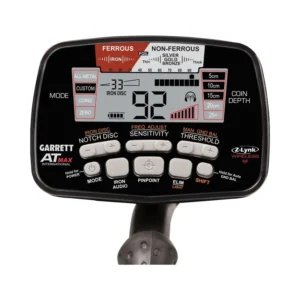
The heart of the machine, as with the Pro, is the proportional audio. Instead of flat on-off beeps, the sound swells and changes with the target’s size, depth and how it is lying, so the audio itself carries information. Long-term users describe more or less reading the ground by ear once it clicks. On UK pasture and ploughed fields for coins, buttons, buckles and relics, owners generally rate it highly, and the backlight finally means you can read the screen at dusk or through sunglasses, which the Pro never let you do.
The chatter, and the honest truth about salt
No review worth reading skips the bad bits. The single most repeated complaint about the AT Max is chatter, that restless nattering the machine can fall into when you wind the sensitivity up. The fix most owners land on is simple, back the sensitivity off and it settles down and runs clean, and a quiet machine you can actually hear the deep whispers through will out-find a screaming one every time. That said, a minority fought it harder than that, and a few had units swapped under warranty, so it is a real talking point rather than a non-issue. Worth knowing Garrett’s warranty service gets good marks when something does go wrong.
The honest big one for our kind of detecting is the salt beach. The AT Max is single-frequency, and on wet salt sand single-frequency machines false and struggle, full stop. Some of the marketing nudges toward beach use and the community is blunt about it: no single-frequency VLF performs properly in salt. On inland fields and in freshwater it is in its element. If your detecting is mainly on salt beaches, this is simply the wrong tool, and you would want a multi-frequency machine instead.
If I were buying one, here is what I would actually do
Lean on the Z-Lynk wireless headphones rather than the basic stock audio, because the included kit has always been the weakest part of the Garrett package. Do not chase the sensitivity dial either, the temptation is to run it flat out because it sounds powerful, but on chattery ground a sensible setting that stays quiet will find you more, not less, since you can actually hear the deep whispers. And if you hunt heavy trash, a smaller coil than the stock DD makes pinpointing and digging neat holes far easier in the rubbish.
Buying one used in 2026
Used AT Maxes are out there and usually represent good value now. Before you pay, look closely at the coil and headphone sockets and plugs, because the AT-series connectors are fiddly and can be damaged if someone has forced them. Check the screen is clear and the backlight works, confirm the Z-Lynk pairs with a set of wireless phones there and then, and if the machine has obviously seen water, satisfy yourself the seals are intact. Power it up and listen for whether it sits reasonably stable indoors rather than chattering wildly from the off.
Where it sits in 2026, and whether to spend up
This is the question that actually matters now. The Max is an older design, and the world moved to simultaneous multi-frequency around it. A used Minelab Equinox 600 or 800, or a Nokta Legend, will generally beat it on the salt beach and on outright separation in really mineralised or trashy ground, and for a lot of detectorists that matters more than wireless and a backlight. Garrett’s own multi-frequency land machine is the ACE Apex, though it is worth saying the Max tends to get the warmer reviews of the two.
None of that writes the AT Max off. It just sharpens what it is best at. As a rugged, deep, dependable inland and freshwater machine with wireless audio and a screen you can actually read, bought sensibly used, it still does a proper job. If you specifically want one tough do-it-all that shrugs off rivers and rough handling and you are not fussed about salt beaches, it is an easy machine to live with.
Community Verdict
After reading years of owner opinion, the picture is steady. The AT Max is the AT Pro with its two worst niggles fixed, wireless audio and a backlit screen, on the same tough, genuinely waterproof platform. Inland and in freshwater it has aged well and owners stay loyal to it.
On salt and on outright modern separation it has been overshadowed by multi-frequency rivals, and that is the honest limit of a single-frequency machine in 2026. Is it better bought used than new? For most people now, yes. The most telling thing is how many long-term owners still rate theirs and keep swinging it, chatter, throwaway headphones and all. For the right detectorist, on the right ground, it remains a lot of dependable, deep machine for the money.
Remember, this is me handing on the collected wisdom of people who have actually put the years in, not my own field notes. If you have run an AT Max yourself and reckon I have got something wrong, drop me a line through the contact page. The site is always better for being corrected.
👍 Strengths
- ✓Wireless headphone Z-Lynk built-in
- ✓Submersible to 3m
- ✓Enhanced iron audio option
- ✓Maintains AT Pro ergonomics
- ✓Z-Lynk has near-zero latency
👎 Compromises
- ✗More expensive than AT Pro for modest gains
- ✗13.6 kHz slightly less sensitive to small targets than 15 kHz
- ✗Z-Lynk headphones sold separately
Key Specifications
A capable, well-rounded choice that delivers solid value. Best suited to intermediate-level detectorists focused on coins, relics, beach, all-purpose.
Last reviewed: 2026-05-24
Affiliate disclosure: we may earn a commission at no extra cost to you. Our reviews stay independent.
Garrett AT Max: Owner's Reference and Setup
The practical detail behind the review: the coils that fit, the accessories worth knowing about, sensible starting settings and the questions owners ask most. Checked against Garrett's listings and the wider owner community.
Best accessories for the Garrett AT Max
- Waterproof headphones The one that matters. The AT Max is submersible, but normal land headphones are not, so you need Garrett-compatible waterproof headphones for submerged work.
- Built-in Z-Lynk wireless The AT Max has Garrett's Z-Lynk wireless built in, so it pairs with Z-Lynk headphones out of the box on dry land.
- Search coils and covers Garrett's own Pro-Pointer AT is the usual pairing, and it is waterproof to match.
- A pinpointer and digging tool Garrett's own Pro-Pointer AT is the usual pairing, and it is waterproof to match.
Coils that fit the Garrett AT Max
| Coil | Type | Best for |
|---|---|---|
| Stock DD | 8.5 x 11 in DD | General all-round use |
| Small sniper DD | Compact DD | Iron-littered trashy ground and tight pinpointing |
| Larger coil | 12 to 13 in class DD | Coverage and depth on cleaner pasture or beach |
The AT Max ships with an 8.5 x 11 inch DD coil and shares the AT coil family with the AT Pro and AT Gold. Aftermarket coils are made by NEL, Detech and Mars; check the listing names the AT Max or the AT family before buying.
Headphones and audio for the Garrett AT Max
The AT Max has Z-Lynk wireless built in and a 6.35 mm headphone socket under a waterproof cover. For submerged work you must switch to Garrett-compatible waterproof headphones.
Best settings for the Garrett AT Max
- Learn in the default mode first, then explore the fuller audio as you get used to it.
- Ground balance at every site, manually where the soil changes across a field.
- Use the higher gain carefully, since the AT Max is a sensitive machine that can chatter if run flat out.
- Wind sensitivity back in heavy iron or on wet salt rather than fighting the falsing.
Firmware and manuals for the Garrett AT Max
There is no user-installable firmware for the AT Max. Treat it as a fixed control box, which is one less thing to check when buying used.
Garrett publish the AT Max manual in their support area; it is worth a read for the audio behaviour, ground balance procedure and waterproof-care instructions.
View the manualGarrett AT Max: common questions
Is the AT Max waterproof?
Yes, it is submersible to 3 metres (about ten feet) for fresh and salt water. Use waterproof headphones for submerged work.
What does the AT Max add over the AT Pro?
Higher operating frequency, more depth and sensitivity, built-in Z-Lynk wireless and a backlight. Both are rugged single-frequency all-terrain machines.
Is the AT Max still worth buying?
For rugged single-frequency all-terrain use, yes. If wet-salt beach performance is the priority, weigh it against the Apex and modern multi-frequency machines.
More detectors and guides
See how the Garrett AT Max stacks up in our Garrett AT Max vs Garrett AT Pro comparison. Or browse other Garrett machines like Garrett Apex, Garrett ACE 400 and Garrett ACE 300. Read the Garrett range in full, or open the detecting glossary for plain-English explanations of recovery speed, ground balance and target ID.