Garrett ACE 400 Review
Research-Based Review
Where this comes from: a research-based review. I have not owned the ACE 400 myself, so this pulls together what long-term owners, UK dealers and field testers say rather than my own field time. I did own its close cousin the Euro Ace, so I know the family well, but the verdict below on the 400 specifically is the community’s, not mine.
The detector that sat at the top of the Ace tree
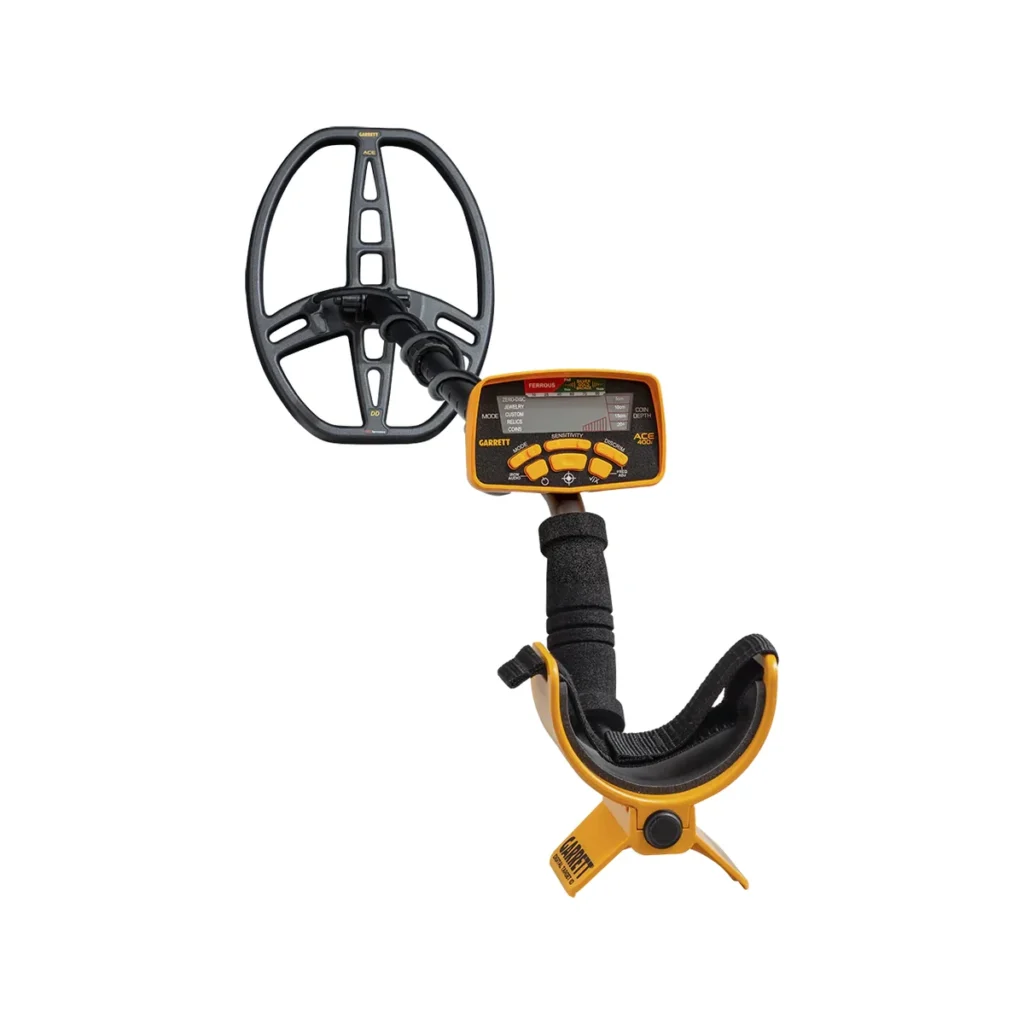
For years the ACE 400 was the machine you ended up on if you wanted the most detector Garrett would sell you before crossing into dearer kit. It is the best-specced of the single-frequency Aces, and the last hurrah of that line before Garrett pushed everyone towards the multi-frequency Apex. Owners generally describe it the same way: simple, light, switch on and go, and surprisingly capable for the money.
What owners genuinely rave about
The thing that comes up again and again is depth for the price. With the stock 8.5 by 11 inch DD coil, owners regularly report solid coin-sized signals at 8 to 10 inches, with the occasional deeper recovery on bigger or favourable targets. That matters because a beginner machine that only reaches the shallow stuff leaves the older, deeper coins in the ground, and those are usually the ones worth having.
Iron audio is the other feature owners point to. In plain terms it lets you hear iron as a low grunt rather than having it hidden or dressed up as something good. The practical payoff is that on a trashy site you can keep your eyes up and your sweep going, and still tell a bottle cap or a nail from a likely coin by ear. The 10 kHz operating frequency also makes it a touch livelier on small, low-conductivity targets than the cheaper Aces, which helps with small hammered and bits of gold.
Beyond that it is the usual Ace appeal: light at under three pounds, long battery life on AA cells, and a target ID most people get the hang of in an afternoon. The adjustable frequency is a small but useful touch, letting you nudge the machine across four settings to step away from electrical interference or another detector if you are hunting near a mate.
The gripes that come up over and over
The big one, and you will see it in almost every long-term thread, is the lack of manual ground balance. The ACE 400 runs a factory-preset balance tuned for average soil. On clean inland ground that is fine. On mineralised UK ground, and especially on wet salt sand, owners report it starts falsing and chattering, and the only fix is to wind the sensitivity down. Drop it far enough and your depth collapses, which means on the worst ground the 400 quietly becomes a much shallower machine than the spec suggests. A few owners put it bluntly, that on their bad soil the clever features stopped earning their keep.
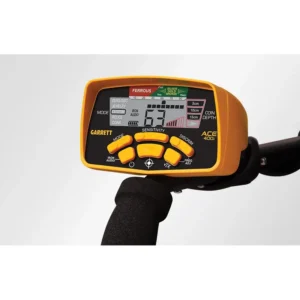
After that the complaints are more about comfort than performance. The arm cuff is on the short side and gets uncomfortable on long sessions, the machine is a little nose-heavy with the stock DD coil, and the LCD is small enough that some owners find it a squint at arm’s length. None of those are dealbreakers, but they are the sort of thing that nags after a full day in the field.
Worth being clear on before you buy: the ACE 400 is not a waterproof machine. The coil and stem will take rain and a splash, but the control box will not, so this is a dry-land and shallow-edge detector. If your plan involves the surf, this is the wrong tool and no amount of careful sweeping changes that.
If I were buying one, what I would actually do
These turn up cheap used now, and at the right price the 400 is a sensible coin and relic machine for parks and easy pasture. If you are buying secondhand, click through every button to check none have gone stiff or dead, because Ace buttons are a known weak point. Have a good look at the coil ears for cracks, check the cuff and stem are not worn loose, and make sure there is a coil cover on it. For accessories I would not go mad, but a rain cover for the box, decent headphones and possibly a smaller sniper coil for trashy ground are the sensible spends. I would not rush to buy one brand new at full price in 2026 when waterproof, ground-balancing rivals exist around the same money.
Who it suits, and who should look elsewhere
I would happily point a beginner or improver who hunts parks, fields and easy inland ground towards a 400, particularly someone who wants to keep things simple and is mostly after coins. It rewards that kind of use. I would steer away anyone who needs to detect wet beach or saltwater, anyone on genuinely mineralised ground who needs to ground balance to get the depth, and anyone who wants the flexibility of multiple frequencies and a wardrobe of coils. For those people the Garrett Apex, a Nokta Simplex or a Minelab Vanquish answers the brief better.
Community Verdict
The settled community view is that the ACE 400 is a likeable, capable, easy machine that gives a beginner real depth and a couple of genuinely useful features without a steep learning curve. Owners rate it for coins on parks and easy ground and tend to speak fondly of it. The honest caveat is the fixed ground balance and the lack of waterproofing, which between them define where it works well and where it struggles. As a cheap used buy for inland coin hunting it still does a proper job. As a brand new purchase in 2026 it has been quietly overtaken by machines that do more for the same outlay.
If you have owned a 400 and see it differently, especially on how it copes with your local ground, I would genuinely like to hear it through the contact page.
Full Specifications
How It Performs On Each Terrain
Pros & Cons
👍 What We Like
- ✓DD coil as standard
- ✓Improved depth and separation
- ✓Electronic pinpoint
- ✓0 – 99 numeric target ID
- ✓Strong Garrett support community
👎 Watch Out For
- ✗No ground balance (auto notch only)
- ✗Not waterproof
- ✗Single frequency limits versatility
A capable, well-rounded choice that delivers solid value. Best suited to beginner-level detectorists focused on coins, relics, all-purpose.
Last reviewed: 2026-05-24
Affiliate disclosure: we may earn a commission at no extra cost to you. Our reviews stay independent.
Garrett ACE 400: Owner's Reference and Setup
The practical detail behind the review: the coils that fit, the accessories worth knowing about, sensible starting settings and the questions owners ask most. Checked against Garrett's listings and the wider owner community.
Best accessories for the Garrett ACE 400
- A pinpointer Garrett's Pro-Pointer AT is the usual pairing and speeds up recovery on a beginner-friendly machine.
- Wired or Z-Lynk headphones The ACE 400 uses a 6.35 mm socket; Garrett's Z-Lynk kit adds wireless on dry land.
- A coil cover The usual starter kit that makes a day easier.
- A digging tool and finds pouch The usual starter kit that makes a day easier.
Coils that fit the Garrett ACE 400
| Coil | Type | Best for |
|---|---|---|
| Stock DD | 8.5 x 11 in DD | General all-round use and the supplied coil |
| Small sniper DD | Compact DD | Trashy iron-littered ground and tight separation |
| Larger coil | 12 in class DD | Coverage on cleaner open ground |
The ACE 400 shares the ACE coil family and there is good aftermarket support (NEL, Detech, Mars). Confirm a coil is listed for the ACE 400 or ACE family before buying.
Headphones and audio for the Garrett ACE 400
The ACE 400 has a 6.35 mm headphone socket. Any wired headphones work on land, and Garrett's Z-Lynk system adds wireless. The control box is not submersible, so there is no underwater audio to plan for.
Best settings for the Garrett ACE 400
- Use the preset discrimination modes and iron audio to learn the machine.
- Ground balance is preset (fixed) on the ACE line, so focus on discrimination, sensitivity and the iron audio.
- Back sensitivity off if the machine chatters rather than running it flat out.
- Dig repeatable mid to high tones as a beginner before chasing marginal signals.
Firmware and manuals for the Garrett ACE 400
There is no user-installable firmware for the ACE 400. It is a fixed single-frequency control box, which is one less thing to check when buying used.
Garrett publish the ACE 400 manual in their support area; it covers the discrimination modes, iron audio and Digital Target ID.
View the manualGarrett ACE 400: common questions
Is the ACE 400 waterproof?
The coil is waterproof but the control box is not, so detecting in rain is fine but do not submerge it.
Is the ACE 400 good for beginners?
Yes, it is one of the most popular beginner machines, with Digital Target ID and iron audio to help you learn.
Is the ACE 400 any good on salt beaches?
Not really. It is single-frequency VLF and struggles on wet salt sand. For beaches, look at the Apex or a multi-frequency machine.
More detectors and guides
Compare it head to head in Garrett ACE 400 vs Nokta Simplex+ and Garrett ACE 400 vs Garrett ACE 300. Or browse other Garrett machines like Garrett ACE 200, Garrett Apex and Garrett AT Max. Read the Garrett range in full, or open the detecting glossary for plain-English explanations of target ID, iron bias and ground balance.