Garrett ACE 300 Review
Review Overview
Where this comes from: a research-based review. I have not owned the ACE 300, so this draws on long-term owners, UK forums and dealer feedback rather than my own field time. I did own the Ace 150, Ace 250 and Euro Ace, so the family is familiar, but the verdicts below are the community’s, not mine.
The natural heir to the Ace 250
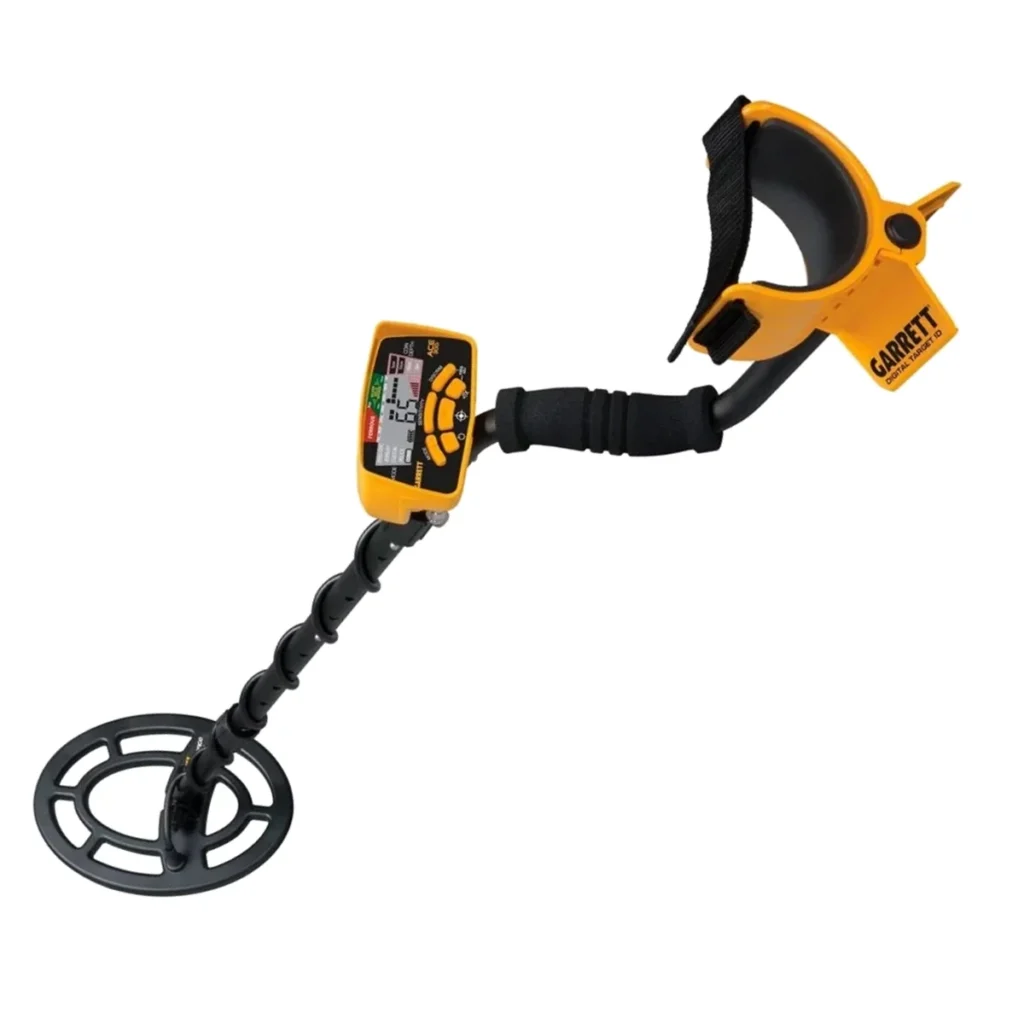
The ACE 300 is the machine Garrett built to replace the Ace 250, which was one of the best-loved beginner detectors ever made. The brief was simple: keep the easy, reliable character of the 250 and modernise it. Owners generally agree it did that, adding a proper digital target ID and cleaner search modes while staying the kind of detector you can hand a complete newcomer and have them finding things the same day.
What owners like about it
Most of the praise lands on the same handful of things. It is cheap, it is simple, and it just works. There is no menu to wrestle, the modes are obvious, and the battery life on AA cells is long enough that you get several weekend hunts before swapping cells. Owners hunting parks and easy fields are happy with the depth on coins, and plenty of families mention it as a brilliant way to get kids into the hobby, because it is light, rugged and quick to assemble.
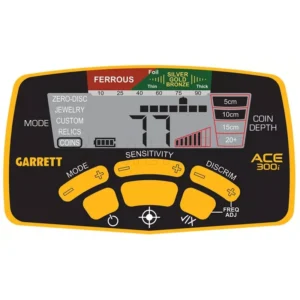
The 8 kHz frequency and the digital ID give a beginner enough information to start telling likely coins from obvious junk, which is exactly what you want when you are learning what the numbers mean. It is not trying to be clever, and that is rather the point of it.
Where it shows its price
The honest limits are the ones you would expect at this end of the market. There is no manual ground balance, so on mineralised UK ground it can get noisy and you lose depth winding the sensitivity back. Recovery speed is on the slow side, and that matters more than beginners realise: when two targets sit close together in trashy ground, a slow machine blurs them into one signal, so a good coin hiding next to an iron nail can simply be missed. The 7 by 10 concentric coil is a decent all-rounder but does not separate or punch quite as deep as the DD coil on the dearer 400. And as with the rest of the Ace line, the control box is not waterproof, so this is dry land and dry sand only.
The feature people most often wish it had is iron audio, which the 300 does not get. That is the deliberate line Garrett drew between this and the 400: pay more and you get iron audio, a bigger DD coil and a higher frequency. Whether that gap is worth the money depends entirely on how trashy your ground is.
If I were buying one
Buy it used and buy it cheap, because they are everywhere and the value is in the low price. Click through every button before you hand over money, since stiff or dead buttons are the classic Ace fault, and check the coil ears for cracks and the cuff and stem for wear. A coil cover and a set of headphones are about all you need to add. The one thing I would do before buying at all is be honest about your ground and your ambitions, because if either points towards mineralised soil, wet beaches or deep old coins on iron-heavy sites, the 300 is not really the machine and your money is better spent elsewhere.
Who it is for, and who should skip it
This is a starter machine, and a good one, for someone on parks, gardens, easy pasture and dry sand who wants the cheapest sensible way into the hobby, or for a family wanting something the kids can use too. I would steer away anyone on tough ground, anyone who wants to chase deep hammered on iron-infested fields, and anyone who would rather buy once and not upgrade in a year, because they will outgrow it. Within budget money the Nokta Simplex, with its waterproofing and proper ground balance, is the rival that makes the 300 a harder sell than it used to be.
Community Verdict
The community view is warm but realistic. The ACE 300 is a likeable, dependable, genuinely easy starter that carries on the good name of the 250 and gets a lot of people hooked on detecting. Nobody pretends it is a deep, do-it-all machine, and the missing ground balance and slower recovery are the honest limits. As a cheap first detector it still does the job it is meant to do. The catch in 2026 is that waterproof, ground-balancing budget rivals now offer more for similar money, so while owners rarely regret starting on a 300, fewer would say it is the smartest buy at the price today.
If you started out on a 300 and have a view on how it held up, I would be glad to hear it through the contact page.
Full Specifications
Pros & Cons
👍 What We Like
- ✓Larger coil for more depth
- ✓Pinpoint mode
- ✓5 search modes
- ✓Numeric target ID
- ✓Clear LCD display
👎 Watch Out For
- ✗No ground balance
- ✗Concentric coil in trashy sites
- ✗Not waterproof
- ✗Basic audio
How It Performs
A dependable budget option with a few clear limitations. Best suited to beginner-level detectorists focused on coins, all-purpose.
Last reviewed: 2026-05-24
Affiliate disclosure: we may earn a commission at no extra cost to you. Reviews stay independent.
Garrett ACE 300: Owner's Reference and Setup
The practical detail behind the review: the coils that fit, the accessories worth knowing about, sensible starting settings and the questions owners ask most. Checked against Garrett's listings and the wider owner community.
Best accessories for the Garrett ACE 300
- A pinpointer Garrett's Pro-Pointer AT speeds up recovery on a beginner-friendly machine.
- Wired or Z-Lynk headphones The ACE 300 uses a 6.35 mm socket; Garrett's Z-Lynk kit adds wireless on dry land.
- A coil cover The usual starter kit that makes a day easier.
- A digging tool and finds pouch The usual starter kit that makes a day easier.
Coils that fit the Garrett ACE 300
| Coil | Type | Best for |
|---|---|---|
| Stock DD | 7 x 10 in DD | General all-round use and the supplied coil |
| Small sniper DD | Compact DD | Trashy iron-littered ground and tight separation |
| Larger coil | 12 in class DD | Coverage on cleaner open ground |
The ACE 300 shares the ACE coil family with good aftermarket support (NEL, Detech, Mars). Confirm a coil is listed for the ACE 300 or ACE family before buying.
Headphones and audio for the Garrett ACE 300
The ACE 300 has a 6.35 mm headphone socket. Any wired headphones work on land, and Garrett's Z-Lynk system adds wireless. The control box is not submersible.
Best settings for the Garrett ACE 300
- Use the preset discrimination modes and iron audio to learn the machine.
- Ground balance is preset (fixed) on the ACE line, so focus on discrimination, sensitivity and iron audio.
- Back sensitivity off if the machine chatters rather than running it flat out.
- Dig repeatable mid to high tones as a beginner before chasing marginal signals.
Firmware and manuals for the Garrett ACE 300
There is no user-installable firmware for the ACE 300. It is a fixed single-frequency control box, which is one less thing to check when buying used.
Garrett publish the ACE 300 manual in their support area; it covers the discrimination modes, iron audio and Digital Target ID.
View the manualGarrett ACE 300: common questions
Is the ACE 300 waterproof?
The coil is waterproof but the control box is not, so detecting in rain is fine but do not submerge it.
What does the ACE 300 add over the ACE 200?
Two more search modes, iron audio, a higher frequency and finer target ID, so it is the better all-round learner.
Is the ACE 300 any good on salt beaches?
Not really. It is single-frequency VLF and struggles on wet salt. For beaches, look at the Apex or a multi-frequency machine.
More detectors and guides
Compare it head to head in Garrett ACE 300 vs Garrett ACE 400 and Garrett ACE 300 vs Fisher F22. Or browse other Garrett machines like Garrett ACE 200, Garrett Apex and Garrett AT Max. Read the Garrett range in full, or open the detecting glossary for plain-English explanations of ground balance, notch discrimination and depth.