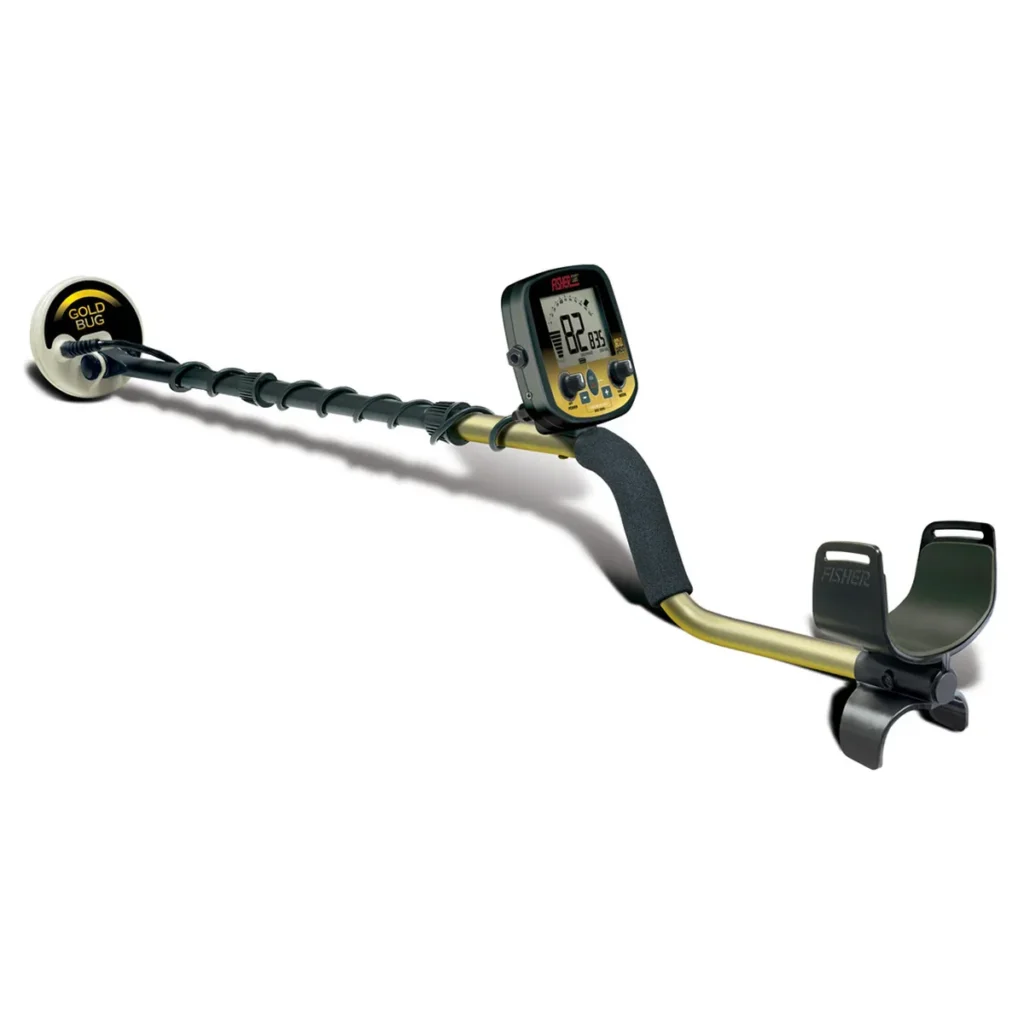
Fisher Gold Bug Pro Review
Our Full Review
Where this comes from: a research-based review. I have not personally owned or swung the Gold Bug Pro, so this pulls together what prospectors, long-term owners and reviewers have reported over the years, rather than my own field time.
A gold machine with a UK twist
The Fisher Gold Bug Pro arrived in 2010 and is still in production, which tells you plenty on its own. It is a high-frequency machine, running at 19 kHz, and it was built first and foremost to find small gold. That frequency is the whole story. A high operating frequency makes a detector far more sensitive to small, low-conductive targets, which is exactly what a tiny gold nugget is, and it is why prospectors have kept buying this machine for over a decade.
Here is the honest bit for a UK reader, and it is the first thing I would want to know. Britain has almost no natural gold in the ground, so nugget hunting is not really why you would own one here. The reason a UK detectorist looks at a Gold Bug Pro is that the same high-frequency sensitivity that finds a sub-gram nugget also lights up small, thin, low-conductive finds: small hammered silver, tiny cut coinage, gold rings and little artefacts that a lower-frequency coin machine can quietly walk straight over. Understand that and you understand where this detector fits.
What owners genuinely rave about
The sensitivity to small targets is the headline, and long-term owners do not undersell it. There are well-documented recoveries of tiny gold sitting inches from rusty nails, which is the sort of thing that makes a small-target machine worth owning. In all-metal with a decent DD coil, owners report it approaching pulse-induction depths on small gold in mild ground, which for an affordable VLF is a real achievement.
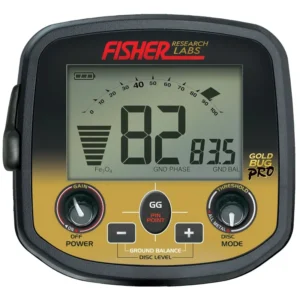
Two features do the heavy lifting. The first is the real-time ground balancing. Rather than fighting mineralised soil, the machine continuously reads and balances to it and even shows you a mineralisation figure, and owners consistently say this is what lets it stay sensitive in ground that would have a cheaper machine screaming. The second is Iron Audio, which lets you hear ferrous targets as a low grunt while good targets ring high. In plain terms, that means you can work iron-infested ground and still pick out the non-ferrous find beside the nail, instead of digging every scrap of rust.
And it is light. Owners repeatedly describe swinging it high and low all day with no arm strain, and several long-term users talk about using and abusing theirs for years with the build holding up well.
The gripes that come up again and again
The most common complaint is unstable target ID. In mineralised ground and at depth, owners report the numbers bouncing around, jumping from the twenties up into the eighties, so you learn to trust the tones and your ears more than the screen. That is manageable once you expect it, but it frustrates people who want a rock-steady ID readout.
It also falses. As ground mineralisation and salt change, especially on a beach, the ID and audio can get jumpy, and the usual advice is to back the sensitivity down to eight or nine out of ten in hot or trashy ground rather than running it flat out. And because it is a high-frequency machine, it gives up depth on large, deep silver coins compared with a lower-frequency coin detector. That is not a fault, it is physics, but it is the trade-off you accept for the small-target sensitivity.
One practical warning: the control box is not waterproof, even though the coil is. This is not a machine to take wading.
The single biggest mistake I see owners make is running the sensitivity flat out on hot or trashy ground and then blaming the machine for chattering. Wind it back a notch or two and it settles down and finds more, not less.
If I were buying one, and who it suits
Used prices are keen and the machine is still sold new, so you have options. Buying used, I would check the waterproof coil carefully for cracks and knocks, test that the ground balance grabs properly, and look over the connector. For dense trash a 5-inch DD coil is the accessory worth having, since it tightens separation, while the standard elliptical DD is a fine all-rounder.
I would point a small-target specialist towards one without hesitation: someone who wants gold jewellery, small hammered silver and tiny artefacts, or anyone who genuinely does hunt gold abroad. I would steer away the person who wants one machine to bang out deep Roman coins on heavy pasture, and anyone wanting a submersible beach and water detector, because neither is this machine’s job.
Community Verdict
The community view has stayed remarkably steady: the Gold Bug Pro is a light, cheap, seriously sensitive high-frequency specialist that still does its job better than its price suggests. The wobbly target ID and the falsing in hot ground are real, and owners just learn to work with them. What has changed around it is the rise of multi-frequency machines like the Equinox, which now offer gold-grade sensitivity and proper coin depth in one body, and that has absorbed a lot of its old appeal. But as a dedicated, affordable small-target and small-gold tool it remains a machine owners are glad to own, and in the UK it is best understood as a small-hammered and jewellery specialist rather than a general coin machine.
This is a research-based summary rather than my own field time. If you have run a Gold Bug Pro on UK soil and rate it differently, drop me a line through the contact page and I will fold it in.
How It Performs
- ✓High 19 kHz frequency for gold sensitivity
- ✓DD coil handles mineralised goldfield soils
- ✓Fast target response
- ✓Lightweight
- ✓Good depth for the frequency
- ✗Not versatile for general detecting
- ✗Limited in highly mineralised ground vs PI machines
- ✗2-tone audio lacks nuance for mixed targets
A capable, well-rounded choice that delivers solid value. Best suited to intermediate-level detectorists focused on gold, relics.
Last reviewed: 2026-05-24
Affiliate disclosure: we may earn a commission at no extra cost to you. Our reviews stay independent.
Fisher Gold Bug Pro: Owner's Reference and Setup
The practical detail behind the review: the coils that fit, sensible starting settings and the questions owners ask most. This is a high-frequency gold and small-target machine, so the reference reflects that. Checked against Fisher's listings and the wider owner community.
Best accessories for the Fisher Gold Bug Pro
- Wired headphones Since faint small-gold responses are easy to miss on the speaker.
- A small coil The key tool for trash, tight ground and bedrock cracks, covered below.
- A coil cover Speeds up recovery of tiny targets in mineralised ground.
- A pinpointer Speeds up recovery of tiny targets in mineralised ground.
Coils that fit the Fisher Gold Bug Pro
| Coil | Type | Best for |
|---|---|---|
| Small DD (stock) | 5 in DD | Tiny gold, trash and bedrock cracks |
| 5 x 10 in DD | DD | More coverage while staying sensitive |
| Larger Gold Bug coil | DD | Coverage on cleaner ground |
First Texas Gold Bug, G2 and F-series coil families get confused in used listings, so confirm a coil names the Gold Bug Pro specifically before buying.
Headphones and audio for the Fisher Gold Bug Pro
The Gold Bug Pro uses wired headphones, and prospectors recommend them because the small, faint responses are easy to miss otherwise.
Best settings for the Fisher Gold Bug Pro
- Ground balance often, using the real-time Fe3O4 mineralisation readout.
- Run sensitivity as high as it stays stable and search in all-metal for gold.
- Use the small coil in trash or tight bedrock.
- Treat target ID cautiously on tiny or deep targets, and scrape and recheck noisy hot rocks.
Firmware and manuals for the Fisher Gold Bug Pro
There is no user-installable firmware for the Gold Bug Pro. Fisher's support provides manuals and service rather than a downloadable updater.
Fisher's manual is the reference for ground balance, the mineralisation readout, all-metal operation, discrimination and target ID.
View the manualFisher Gold Bug Pro: common questions
Is the Gold Bug Pro only for gold?
No. It is gold-focused, but the 19 kHz frequency also suits small jewellery and low-conductive relic targets.
Is the Gold Bug Pro waterproof?
Treat it as a land detector with a waterproof coil only, unless the documentation says otherwise for a specific part.
Is the Gold Bug Pro a good first do-everything detector?
No. Buy it for small gold and small low-conductive targets, not as a general coin machine.
More detectors and guides
Browse other Fisher machines like Fisher F75, Fisher F44 and Fisher F22. Read the Fisher range in full, or open the detecting glossary for plain-English explanations of target ID, iron bias and ground balance.