Fisher F22 Review
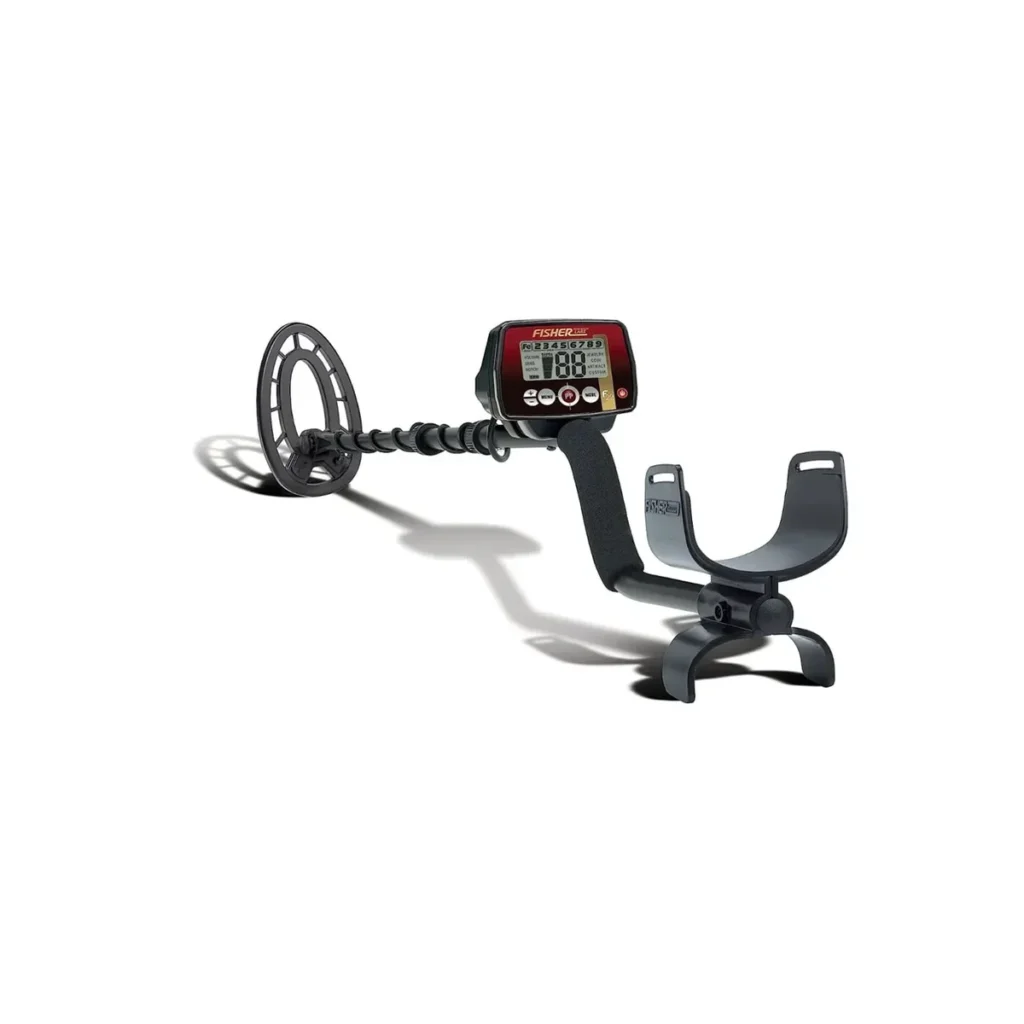
Fisher F22 Review
Is This Detector Right For You?
The Full Review
Where this comes from: a research-based review. I have not owned the F22 myself, so everything below is pulled together from long-term owners, entry-level reviews, forum threads and field-test videos rather than my own digs. Where the community broadly agrees, I have said so; where opinions split, I have flagged it.
The budget machine everyone keeps recommending
If you spend any time reading “what should my first detector be” threads, the Fisher F22 comes up again and again. For years it has been one of the default answers to that question, and the reason is simple: it packs a couple of features you would normally expect to pay a lot more for into a light, cheap, switch-on-and-go package. It is the middle child of Fisher’s F11, F22 and F44 range, and for most beginners it hits the sweet spot between the too-basic F11 and the dearer F44.
The feature that makes it stand out
Most budget detectors give you tones and a target number and leave it there. The F22 adds iron audio, and that is the headline. Iron audio lets you hear iron for what it is rather than just seeing a low number, so when you are working a rubbish-strewn field or an old site littered with nails, you can tell a lot of the junk apart by ear without stopping to stare at the screen every swing. That matters because the thing that kills beginners on trashy ground is digging endless nails, and anything that helps you leave the iron in the ground and dig the good stuff is worth having. At this price, having it at all is unusual, and it is the single feature owners point to most.
On top of that you get a proper pinpoint button, which the cheapest machines often skip. Pinpoint narrows a signal down to a coin-sized spot before you dig, so you cut smaller, tidier holes and lose less time, and for a newcomer that alone shortens the learning curve.
The rest of what owners rate
The praise beyond iron audio is remarkably consistent. It is genuinely light at around 2.3 lb, so it is comfortable for kids and for long sessions. The two-digit 0 to 99 target ID and four-tone audio give a beginner enough to start telling likely coins from obvious rubbish after a little practice. Sensitivity runs across ten levels so you can wind it back when the ground gets noisy. And the battery life is a quiet highlight: owners regularly report twenty-five hours or more from just two AA cells, which is excellent and means cheap, easy top-ups rather than a proprietary pack to charge. The coil and shaft are weatherproof and will take being dunked in a shallow freshwater edge, and it works straight out of the box with almost no fuss.
Read the “weatherproof” badge carefully: the coil and shaft are submersible, but the control box is not. The community is firm that this is a machine for dry land, damp weather and shallow freshwater edges, not the surf, and not saltwater or wet sand. Treat it as splash-proof, not a water machine.
The honest limits
Beyond the waterproofing, the limit that matters most on UK soil is that there is no manual ground balance. On heavily mineralised ground you cannot fine-tune the machine to the dirt, so you can lose depth and pick up more chatter than a ground-balancing detector would. Owners also note it can false a bit if you push the sensitivity too high, and that it will miss the deeper targets a pricier machine would reach. It is a capable coin and general-purpose machine, not a deep relic or hammered specialist, and it is fairest to judge it as exactly that.
If I were buying one, and the rival I would weigh up
Bought new it is still a lot of detector for the money, and used they turn up cheap and are usually reliable. If you buy used, check the coil cable and its connector, look for corrosion on the battery contacts, and make sure the keypad and screen are healthy. A coil cover and a set of headphones are the only accessories most owners bother with, plus perhaps a rain cover for the control box given it is the vulnerable part.
The one machine I would put next to it before buying is the Nokta Simplex. For not a lot more, the Simplex adds proper manual ground balance, full waterproofing and a rechargeable battery, and it is the detector that has done most to knock the F22 off its perch as the automatic budget pick. The F22 still wins on outright simplicity, price and that handy iron audio, but it is no longer the only sensible answer it once was.
Who it is for
I would happily point a beginner or improving detectorist on parks, pasture, dry sand and freshwater edges at an F22, especially anyone working trashy ground who will get real use from the iron audio. I would steer away anyone who mainly hunts salt beaches or surf, anyone on very mineralised ground who needs manual ground balance, and anyone chasing deep relics or hammered on iron-heavy sites, because they will run into its ceiling.
Community Verdict
The community verdict is warm and well earned. The Fisher F22 is one of the best-value ways into the hobby, genuinely liked, light, reliable, and generous with features that usually cost more, with iron audio and a weatherproof coil at this price being the standout. Its real limits are the non-waterproof control box and the lack of manual ground balance, which cap how far it stretches on tough UK ground and rule it out for the sea. The rise of the Nokta Simplex means it is no longer the default budget champion it was, but as a cheap, capable, no-drama first detector it still earns its long-standing recommendation, and few owners feel short-changed by one.
If the F22 was your way into detecting and you rate it differently, I would be glad to hear your take through the contact page.
👍 Strengths
- ✓Weatherproof build
- ✓Excellent battery life (25 hrs)
- ✓5-year warranty
- ✓Clear target ID display
- ✓Featherlight 2.3 lbs
👎 Compromises
- ✗Concentric coil struggles in very trashy sites
- ✗No manual ground balance
- ✗Single frequency limits beach performance
Key Specifications
A dependable budget option with a few clear limitations. Best suited to beginner-level detectorists focused on coins, all-purpose.
Last reviewed: 2026-05-24
Affiliate disclosure: we may earn a commission at no extra cost to you. Our reviews stay independent.
Fisher F22: Owner's Reference and Setup
The practical detail behind the review: the coils that fit, sensible starting settings and the questions owners ask most. This is a friendly weatherproof beginner machine, so the reference reflects that. Checked against Fisher's listings and the wider owner community.
Best accessories for the Fisher F22
- Wired headphones The F22 uses a 6.35 mm socket; wired headphones help on faint targets.
- A coil cover Cheap protection for the supplied 9 inch coil.
- A pinpointer The usual starter kit that makes a day easier.
- A digging tool and finds pouch The usual starter kit that makes a day easier.
Coils that fit the Fisher F22
| Coil | Type | Best for |
|---|---|---|
| Stock DD | 9 in DD | General all-round use and the supplied coil |
| Smaller DD | Compact DD | Trashy iron-littered ground and tight separation |
The F22 shares the First Texas F-series coil family. Confirm a coil names the F22 or the F-series before buying.
Headphones and audio for the Fisher F22
The F22 uses wired headphones through a 6.35 mm socket. It is weatherproof rather than submersible, so keep the control box out of the water.
Best settings for the Fisher F22
- Use the preset modes and iron audio to learn the machine.
- Keep sensitivity stable rather than maxed as you learn.
- Dig repeatable mid to high tones before chasing marginal signals.
- Ground balance is preset, so focus on discrimination and sensitivity.
Firmware and manuals for the Fisher F22
There is no user-installable firmware for the F22. It is a fixed control box.
Fisher publish the F22 manual through their support pages; it covers the modes, iron audio and target ID.
View the manualFisher F22: common questions
Is the F22 waterproof?
It is weatherproof and fine in rain, but the control box is not submersible.
What frequency does the F22 run at?
7.69 kHz VLF, a good general coin and relic frequency, with a 9 inch weatherproof coil.
Is the F22 a good first detector?
Yes, it is one of Fisher's most popular entry weatherproof machines. The F44 is the natural step up.
More detectors and guides
See how the Fisher F22 stacks up in our Fisher F22 vs Garrett ACE 300 comparison. Or browse other Fisher machines like Fisher Gold Bug Pro, Fisher F75 and Fisher F44. Read the Fisher range in full, or open the detecting glossary for plain-English explanations of recovery speed, ground balance and target ID.