XP Deus Review
Research-Based Review
A quick word before we start
I have never owned an XP Deus. It has never been on my arm in a field, and I am not going to pretend otherwise. My own machines have been a run of Garretts, a Minelab X-Terra 705 and the Nokta Simplex I still rate. So this is a research-based review, my honest attempt to boil down years of forum threads, long-term owner write-ups and field testers into where the community has really landed on the original Deus, with the marketing peeled off.
The detector that cut the cable
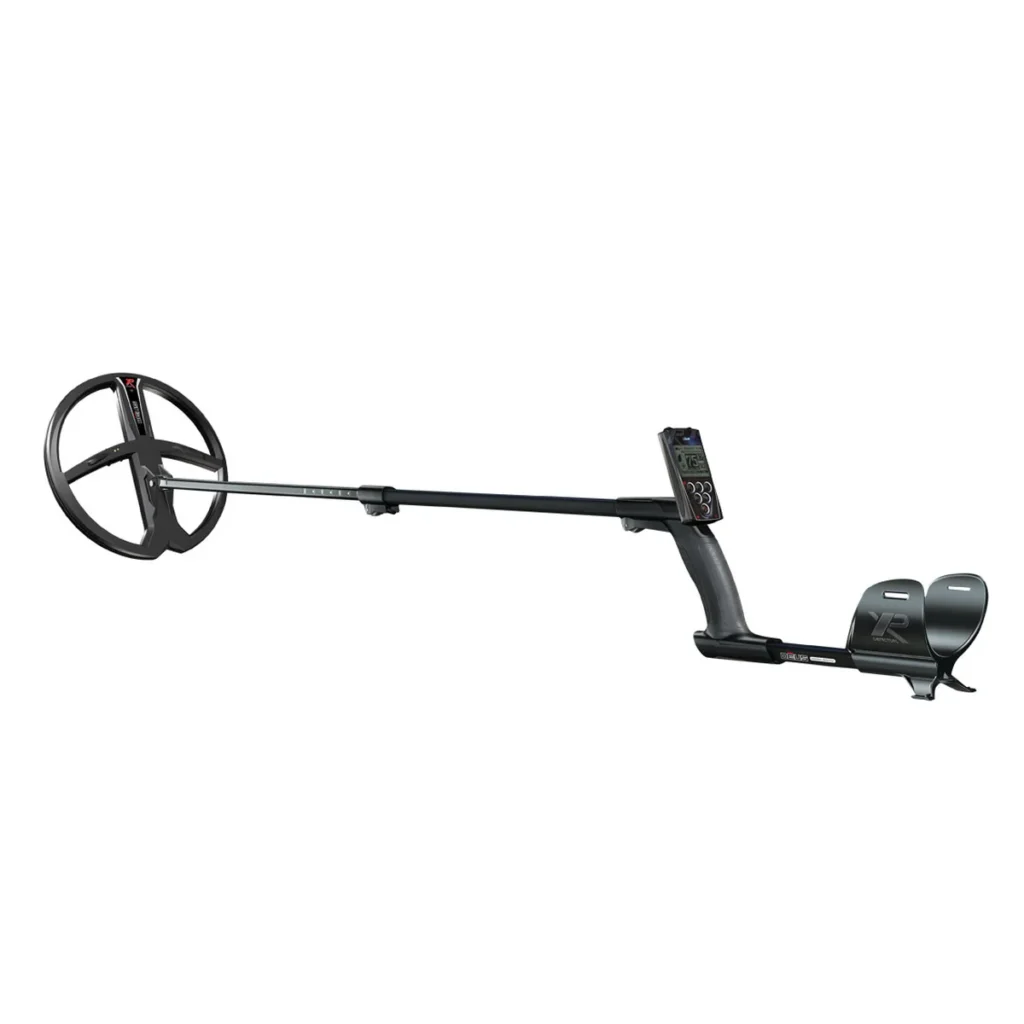
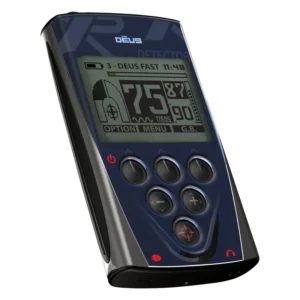
It is hard to explain now, in a world full of wireless kit, just how big a deal the Deus was when it landed. It was the first genuinely wireless detector. Coil, remote and headphones all talked to each other with no wires at all, and you could run the thing with the control box left at home and just the coil and a pair of WS headphones on your head. Nothing else swung like it, and for a lot of detectorists that lightness is still the first thing out of their mouths.
What owners will not shut up about, and why it matters
Spend any time reading Deus owners and three things come up before anything else: weight, recovery speed and separation. They are linked, and they all matter in the dirt.
The weight is the obvious one. With the headphone-only setup there is almost nothing on the shaft, and people who detect all day every weekend swear by it for a simple reason: a light machine is one you actually keep swinging when you are tired. A tired detectorist gets sloppy and lifts the coil, and that is exactly when finds get missed.
Recovery speed is the next, and it is worth explaining rather than just nodding at. That is how fast the detector resets after one target so it can hear the next, and the Deus has always been near the top of the pile for it. Why does that matter? On a trashy old site your good target is usually jammed up next to iron, and a slow machine smears the two into one ugly grunt so you walk over the silver. A fast machine like the Deus pulls the good tone out clean. I have lost count of the threads where someone describes lifting a hammered coin from right beside an iron nail that other machines never separated.
The audio gets its own mention too. Long-term owners genuinely run it by ear, reading targets from the tone without looking at the screen, and they reckon that is half the appeal once it clicks.
The coil question, and why it actually matters
This is one area where buying a Deus needs a bit of thought, because the coil you put on it changes the machine. The X35 coils are the all-rounders, with a spread of frequencies that suit most coin and relic work. The HF, or high frequency, coils are the specialists, and the consensus is they really come alive on tiny, low-conductive targets, which on UK soil means small hammered silver. If you are mostly chasing little hammies on pasture, owners lean HF. If you want one coil to do a bit of everything, the X35 is the safe pick. Worth knowing before you spend, because Deus coils are not cheap.
Where it shines, and the one thing to know before buying
For our kind of detecting the Deus has a strong reputation. On dry inland ground, pasture and plough, it is a genuine performer and a favourite of serious hammered hunters. Its speed and separation are exactly what you want on the iron-carpeted Roman and medieval sites where the good stuff hides.
Here is the honest caveat though, and personally it is the thing I would want clear before handing over money. The original Deus is not a beach or water machine. It is splash resistant, not submersible. Dunk the coil and it loses its link to the remote, and the kit you need to make it work in water is, by most accounts, a faff. People who tried to match it against an Equinox on a salt beach generally came away saying it was not close, because that is simultaneous multi-frequency territory and the original Deus is not built for it. If your detecting is beach-heavy, this is the wrong machine and you want a Deus 2 or an Equinox.
The other recurring grumble is EMI, the electrical interference that makes a machine chatter near power lines and the like. The Deus can be sensitive to it, and some owners report struggling to settle it down in bad spots.
The gripes that come up again and again
No machine is all good, and the Deus has a few well-worn complaints. The remote is the classic one. It clips on, and owners report it working loose or even falling off and getting lost, which is a costly thing to replace on its own. The coil battery is sealed inside the coil, it degrades over the years like all rechargeables, and getting it sorted is awkward and not cheap. The little charging clips get described as flimsy and are a common niggle. And there is a real learning curve here, made worse over the years as firmware piled on more and more to fiddle with. This is not a switch-on-and-go detector if you want the best from it.
If I were buying one, here is what I would do
The single most useful thing I can tell you is to buy on the coil as much as on the machine. Work out whether you want the HF coil for small hammered or the X35 for general work, because that decision shapes what the Deus actually does for you. Beyond that, look after the charging clips and the remote, since those are the bits owners lose and break.
The mistake people make is treating it like a beach all-rounder. It is not one. The other is expecting to master it in a weekend. Give it a season and learn the audio properly, because that is where the machine earns its reputation.
Buying one used? Check these before you hand over cash
- The coil actually connects and stays connected to the controller.
- The sealed coil battery still holds charge through a full day, since it degrades and is awkward to replace.
- The remote pairs properly and is not loose or cracked.
- The charging clips are present and working, as they are a common weak point.
- The coil ear and connector are sound with no cracks.
- Ask which firmware it is on, then make sure it is on a stable version before judging it.
Deus 1 or Deus 2 in 2026?
This is the real question now, because XP still sells both. The Deus 2 is the proper successor. It brings simultaneous multi-frequency and full waterproofing down to 20 metres, which fixes the original’s two biggest limitations in one go and makes it a genuine beach machine as well as an inland one. The honest community steer is this: if you mostly detect dry inland ground, want the lightest possible machine and can find a good-value original, the Deus 1 still does the job it was always brilliant at. If you want one machine for fields and the beach, or you want the latest separation and target ID, the Deus 2 is worth the extra. One thing to know, the Deus 2 coils are not backward compatible with the original, so the two systems do not share kit.
Who I would point towards it, and who I would steer away
If you are a committed inland coin and relic hunter who wants the lightest serious detector going, will learn its ways and mostly stays off the beach, the original Deus is still a lovely thing and owners adore them. I would steer away anyone who wants a beach or water machine, anyone who wants to switch on and wander without learning settings, and anyone on a tight budget, because the Deus has never been the cheap option.
Community Verdict
After reading years of owner opinion, the verdict on the original Deus is warm and remarkably consistent. It is a machine people fall for and keep, praised again and again for its weight, speed and separation, and still a serious tool on dry inland ground in 2026. It has aged well for what it is.
The honest caveats are that it was never a water machine and that the Deus 2 now does everything it does plus the beach. Is it overshadowed? By its own successor and by the Equinox and Legend on outright versatility, yes. But ask long-term owners if they would have another and a lot of them say yes without hesitation, which tells you just how good the original really was.
This is me passing on the collected wisdom of people who have put the years in, not my own field notes. If you have run a Deus yourself and reckon I have got any of this wrong, drop me a line through the contact page. The site is always better for being corrected.
Full Specifications
How It Performs On Each Terrain
Pros & Cons
👍 What We Like
- ✓Lightest professional detector at 2.0 lbs
- ✓Fully wireless (coil + remote + headphones)
- ✓99 user programmes
- ✓Fast and highly adaptable
- ✓Unmatched in iron-infested sites
👎 Watch Out For
- ✗Steep learning curve – 99 programmes can overwhelm
- ✗Not waterproof (coil only)
- ✗Expensive for original Deus
- ✗Superseded by Deus II
An excellent all-round detector that punches well above its price. Best suited to advanced-level detectorists focused on coins, relics, gold.
Last reviewed: 2026-05-24
Affiliate disclosure: we may earn a commission at no extra cost to you. Our reviews stay independent.
XP Deus: Owner's Reference and Setup
The practical detail behind the review: the coils that change what it does, how it updates, sensible starting settings and the questions owners ask most. Checked against XP's own listings and the wider owner community.
Best accessories for the XP Deus
- Headphone module The WS4 and WS5 can run the detector without the remote, so a used package with a working module is more usable in the field.
- The MI-6 pinpointer It integrates with the system, and the S-Telescopic and S-Telescopic Lite are the usual stems.
- A coil cover Since the coil, remote and headphones each hold a battery.
- Keep charging leads together Since the coil, remote and headphones each hold a battery.
Coils that fit the XP Deus
| Coil | Type | Best for |
|---|---|---|
| X35 22.5 cm | 9 in 35 frequencies | Nimble general coil |
| X35 28 cm | 11 in 35 frequencies | The all-round choice |
| X35 34 x 28 cm | 13 x 11 in | Depth and coverage |
| HF coils | 22.5 cm and elliptical | Small low-conductors and hammered silver |
XP wireless coils are active and platform-specific. Deus II FMF coils do not fit the original Deus, and there is no proven third-party aftermarket range.
Headphones and audio for the XP Deus
The original Deus uses WS4 or WS5 style wireless headphones. Which module a used one comes with affects how usable it is without the remote, so it is worth confirming.
Best settings for the XP Deus
- Start from a factory program to suit the site (a Basic or Deus Fast type for trash, a Deep type for pasture).
- Adjust reactivity, sensitivity and discrimination slowly, one at a time.
- Learn the audio; long-term owners run the Deus by ear, and that is where it earns its reputation.
- Confirm the firmware and coil type before you judge a used one, since they change the frequency options.
Firmware and manuals for the XP Deus
XP update the Deus over USB (the current line is the Deus V5 updater), and the updater refreshes the remote, headphones and coil program. Firmware and coil generation matter on the Deus, so get a used one fully up to date before forming an opinion.
XP provide the Deus manual through their download pages; use it for the program descriptions, pairing, charging and the coil frequency rules.
View the manualXP Deus: common questions
Is the original Deus the same as the Deus II?
No. The Deus II is a different, FMF machine. The original Deus is still a serious lightweight detector, especially used, if the package and batteries are sound.
Is the original Deus a beach machine?
It is splash-resistant, not built for salt water like the Deus II. If beach work is the priority, look at the Deus II or an Equinox.
What decides the price of a used Deus?
The coil type, whether the remote is included, the headphone module, battery health and a complete charger.
More detectors and guides
Compare it head to head in XP Deus vs XP Deus II and XP Deus vs Minelab Equinox 800. Or browse other XP machines like XP ORX. Read the XP range in full, or open the detecting glossary for plain-English explanations of ground balance, notch discrimination and depth.