Minelab CTX 3030 Review

Research-Based Review
Straight talk before we start
I have never owned a CTX 3030. It has never been on my arm in a field and I am not going to pretend it has. My own machines have been a string of Garretts, a Minelab X-Terra 705 and the Nokta Simplex I still rate, and I only write first-hand about kit I have actually lived with.
So this is the other kind of review, and the CTX is a brilliant one to do it for, because it has been around since 2012 and there is a deep well of long-term owner experience to draw on. I have gone through years of forum threads, owner write-ups, the field-testers who run a machine for seasons rather than an afternoon, and the recurring grumbles that only show up after a couple of years of real use. What follows is my honest attempt to pull all of that together, with the marketing stripped off.
The machine Minelab built to be the best, full stop
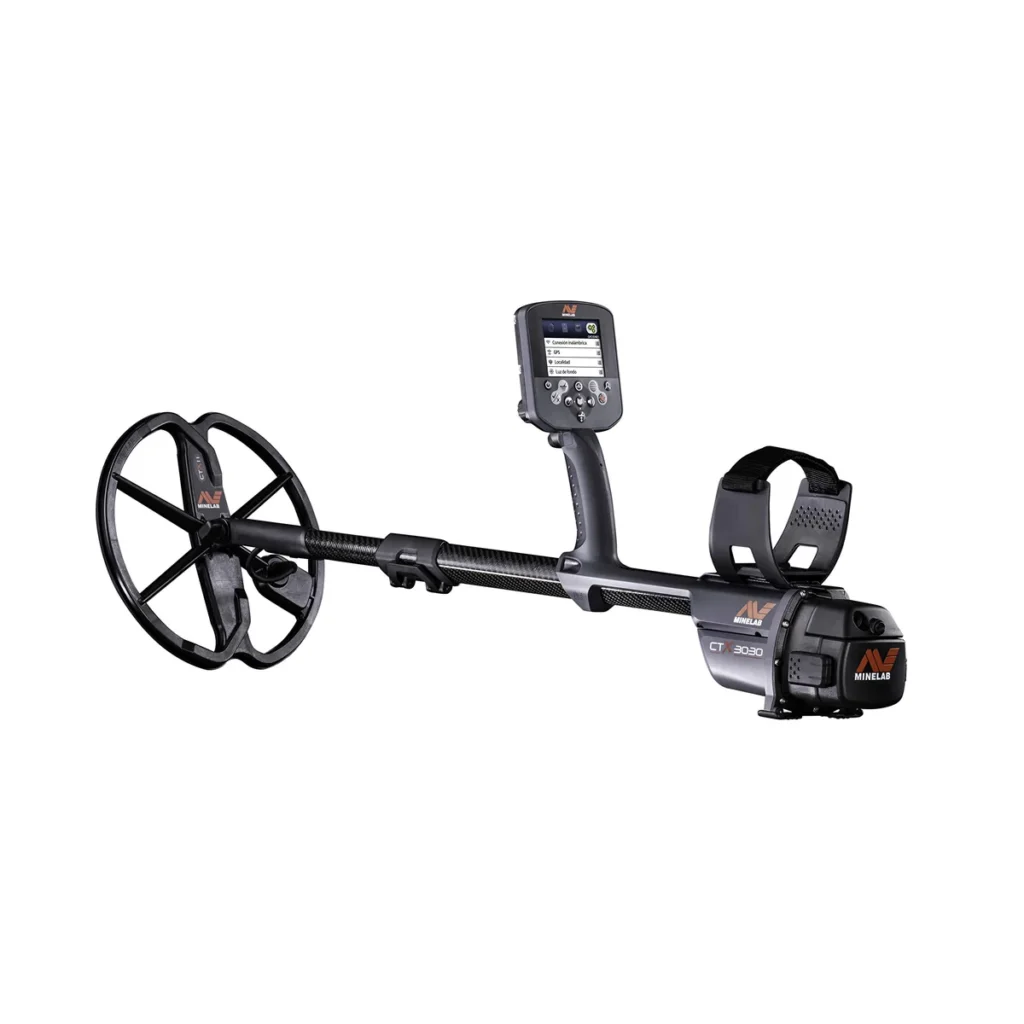
To understand the CTX you have to understand what it was meant to be. This was not a clever all-rounder built down to a price like the Equinox that came later. It was Minelab’s no-compromise flagship, the machine where they threw everything at the problem and did not much care what it weighed or cost. Multi-frequency FBS 2, full waterproofing to ten feet, colour screen, built-in GPS, wireless audio and a depth of customisation that frankly intimidates people. For years, if someone asked what the most capable coin-and-relic detector money could buy was, the CTX 3030 was a very common answer. That reputation is the starting point for everything owners say about it.
What keeps owners loyal, and why it matters in the dirt
Read enough long-term reviews and one theme comes up before any other: the CTX tells you the truth about what is under the coil. Owners generally report that it is exceptional at giving an accurate readout of a target before you dig, and this is where it gets interesting, because that is worth far more than it sounds. A faster, twitchier machine might ping more targets in a session, but a lot of those pings turn out to be rubbish you did not need to dig. The CTX, by broad agreement, is the machine that lets you dig less and recover more of the good stuff, and on a permission where you only get so many hours that is the difference between a productive day and a sore back.
A big part of how it does that is its two-dimensional discrimination, the Fe and Co (ferrous and conductive) picture rather than a single number on a scale. Most detectors flatten a target down to one VDI figure, which is fine until a good target sitting next to iron drags that number around. The CTX maps the target across two axes and gives you the Target Trace, a visual smear that shows how a signal is behaving rather than a single guess. Long-term users say that once you learn to read it, you can tell a bent bit of iron pretending to be a coin from the real thing far more often, and on an old site carpeted in nails that skill is exactly what saves a hammered coin from being walked over.
On depth the consensus is that this is a genuinely deep machine, with owners describing pulling silver out from beyond twelve inches with clean, confident audio rather than a vague whisper. The waterproofing earns a lot of praise too, and not just for wading, because plenty of owners point out that a sealed, dunkable machine simply shrugs off wet grass, rain and mud that would have a non-waterproof control box owner glancing nervously at the sky. The 13 to 16 hour Li-ion battery and the build quality round it out: more than a decade on, people are still using their CTX hard, which tells you the core of the thing was built properly.
The GPS trick nobody else really matched
This is the feature that still makes the CTX stand apart, and it is worth explaining why it matters rather than treating it as a gimmick. The CTX has proper built-in GPS. It can log your finds as waypoints, record the path you have walked so you can see where you have and have not covered, and let you navigate back to a marked spot. On a big permission that genuinely changes how you work a field. You can hunt it methodically instead of wandering in circles, come back next season and pick up exactly where the good signals were thinning out, and build a real picture of where the finds are clustering. Owners who use it properly tend to be the ones most attached to the machine, because nothing else in the mainstream offered this in the same integrated way, and they miss it the moment they switch to anything else.
The elephant on the end of the shaft: weight
If I am honest, this is the thing I would want to be sure about before buying, because it is the single most common complaint by a mile. The CTX is heavy. At roughly 2.3kg it is getting on for double the weight of a modern machine like the Manticore, and owners only half-jokingly call it a beast. Now, the fair-minded view that comes up again and again is that it is so well balanced that the weight is less punishing than the number suggests, and plenty of people swing one all day quite happily. But there is no escaping physics. If you have any issue with your back, wrist or shoulder, or you are the sort who does long, all-day hunts, this is a real consideration and not one to wave away. It is the reason a lot of people who love the performance still ended up moving to something lighter.
The faults that come up on the forums
No machine is faultless and a review that pretends otherwise is not worth reading. The CTX has a handful of genuinely well-documented weak spots. The most talked-about is a line or blob appearing on the screen, where the LCD develops a crack and starts to leak, which clearly happened to enough owners to become a known issue. The good news in those threads is that Minelab generally sorted them out under warranty, but it is worth knowing the screen can be a vulnerable point.
The other recurring one is the coil, specifically the wire where it enters the coil itself. Owners report intermittent error messages and dropouts traced back to a broken wire at that join, and while replacements were covered, some had a long wait for stock. The last honest caveat is saltwater. Yes the CTX is fully waterproof, and it is a superb machine on the land, wet sand and for light wading, but the long-term view from people who hammer it in the surf is that repeatedly submerging any machine in salt eventually causes grief, and the CTX is no exception. Rinse it off after every salty session.
Buying one used? Run through these before you pay
- Look hard at the screen for any line, crack or LCD blob, the known weak point.
- Run the coil and waggle the cable at the coil entry, listening for intermittent falsing or error messages from a broken wire.
- Check it powers off cleanly rather than needing the battery pack pulled.
- Ask whether it has lived in saltwater, and how religiously it was rinsed.
- Confirm the wireless headphones pair on the spot, as they are part of the package.
- Ask about battery health, since the Li-ion pack ages like any other.
If I were buying one, here is what I would do
The most useful accessory for a CTX is not a coil, it is something to deal with the weight, and this is the tip I would pass on first. A bungee harness or a chest support takes the load off your arm and transforms an all-day hunt with this machine. Owners who run one rarely go back. After that, the coils are worth a thought: the standard 11-inch is a good all-rounder, the smaller 6-inch coil is the one to reach for in proper trash and tight corners because it separates better, and the big 17-inch is the depth-and-coverage option for open ground. Do bear in mind the CTX never had the huge aftermarket coil range some machines enjoy, so you are largely in Minelab’s own lineup.
On the mistakes owners make, the big one is buying this machine and expecting to switch on and go. You cannot, not really. Between the modes, the discrimination patterns, the audio options and the GPS, there is a lot here, and the people who skip the learning are the ones who end up frustrated and blaming the detector. The other is not committing to read the Target Trace and the two-dimensional ID properly, because that is the CTX’s real party trick and ignoring it means you have bought a heavy machine and thrown away the very thing that justifies the weight.
Does it still make sense in 2026?
This is the question that actually matters now, because Minelab’s own Manticore sits above the CTX in the range and is the machine they push as the modern flagship. So why would anyone still choose a CTX? The honest answer from the community is a mix of two things. First, the GPS mapping is still genuinely unique and the people who rely on it have nothing modern to replace it with. Second, used values have softened, so you can get an enormous amount of capable, deep, accurate detector for a lot less than it cost new. Against that, the Manticore is lighter, faster in the trash and has a more modern interface, and for most people doing general detecting that combination is simply easier to live with.
| What matters most to you | The honest steer |
|---|---|
| GPS mapping a big permission | The CTX 3030 still has no real mainstream rival here |
| Light weight and speed in the trash | Minelab Manticore (lighter, faster, newer interface) |
| Maximum capability for the least money | A clean used CTX 3030 is a lot of detector for the cash |
| One do-everything machine, easy to live with | Equinox 900 or Manticore over the heavier CTX |
Community Verdict
After working through years of owner opinion, the verdict is refreshingly consistent. The CTX 3030 is still regarded as one of the deepest, most accurate target-ID machines ever made, and the GPS mapping remains a genuine reason to own one. The catch, every single time, is the weight. It is the thing that splits opinion and the reason owners who love the performance still drift towards lighter modern machines.
Has it aged well? In performance, yes, remarkably. In ergonomics, less so, because the hobby has moved towards light and fast. Is it better bought used? For most people, yes, because the secondhand value makes that famous capability far easier to justify. Overshadowed by the Manticore on paper, certainly, but plenty of long-term owners will tell you that for accurate, confident, deep recovery on the land, and for mapping a site properly, the old king still does a serious job. If you can live with the heft, very few who persevered with one regret it.
As ever, this is me passing on the collected wisdom of people who have actually put the years in with a CTX, not my own field notes. If you have owned one and reckon I have got something wrong, drop me a line through the contact page. The site is always better for being corrected.
Full Specifications
How It Performs On Each Terrain
Pros & Cons
👍 What We Like
- ✓28 simultaneous frequencies (FBS2)
- ✓Colour LCD with GPS mapping
- ✓Forensic target discrimination
- ✓Fully submersible
- ✓Industry-leading target ID accuracy
👎 Watch Out For
- ✗Heavy at 5.2 lbs (arm fatigue on long sessions)
- ✗Very expensive
- ✗Overkill for most users
- ✗Steep learning curve
- ✗Chunky design
A top-tier performer and one of the best metal detectors money can buy. Best suited to advanced-level detectorists focused on coins, relics, beach.
Last reviewed: 2026-05-24
Affiliate disclosure: we may earn a commission at no extra cost to you. Our reviews stay independent.
Minelab CTX 3030: Owner's Reference and Setup
The practical detail behind the review: the coils that fit, the accessories worth knowing about, sensible starting settings and the questions owners ask most. Checked against Minelab's own listings and the wider owner community.
Best accessories for the Minelab CTX 3030
- A bungee harness or chest support The most useful CTX accessory by a mile, because it takes the weight off your arm and transforms an all-day hunt.
- Wireless or wired Koss UR-30 headphones The CTX supports wireless audio, with a headphone module adaptor for wired sets.
- A coil cover Handy for long days since the CTX is a heavier all-day machine.
- A spare charged battery Handy for long days since the CTX is a heavier all-day machine.
Coils that fit the Minelab CTX 3030
| Coil | Type | Best for |
|---|---|---|
| 6 inch | DD | Trash and tight corners with better separation |
| 11 inch | DD | The standard all-rounder supplied with the machine |
| 17 inch | DD | Depth and coverage on open ground |
The CTX uses its own coil family and the range was never large, so you are largely in Minelab's own lineup.
Headphones and audio for the Minelab CTX 3030
The CTX supports wireless audio, and Minelab list a headphone module adaptor plus wired Koss UR-30 headphones for anyone who prefers a cable.
Best settings for the Minelab CTX 3030
- Lean on the Fe-Co (ferrous and conductive) ID rather than audio alone, especially in heavy iron.
- Build site-specific discrimination patterns and trust stable conductive numbers on deep coins.
- Sweep slowly; the CTX is not a light rapid-swing machine.
- Use the GPSi logging to grid a big permission properly rather than wandering.
Firmware and manuals for the Minelab CTX 3030
The CTX works with Minelab's XChange 2 desktop software over USB for managing settings, finds and GPS data. Minelab do not surface a current firmware version on the page, so check their software page before relying on a version number.
Minelab host the CTX manual in their Product Downloads and Manuals area. It is worth a proper read given the depth of the discrimination and mapping features.
View the manualMinelab CTX 3030: common questions
Is the CTX 3030 waterproof?
Yes, Minelab list it as submersible to 3 metres. On a used machine, satisfy yourself the seals and history are sound before you dunk it.
Is the CTX 3030 still competitive?
Yes for ID-rich coin and beach work and for GPS mapping, though newer machines are much lighter.
Is the CTX 3030 beginner friendly?
Not really. It rewards learning the 2D ID and careful setup.
More detectors and guides
Browse other Minelab machines like Minelab X-Terra Pro, Minelab Manticore and Minelab GPX 6000. Read the Minelab range in full, or open the detecting glossary for plain-English explanations of target ID, iron bias and ground balance.