Detectorist World

Independent metal detector reviews, clubs and UK guides
Location Guide • South West

Metal Detecting in Cornwall

A county of dramatic landscapes with deep Bronze Age and prehistoric heritage. Acidic granite soils mean metal preservation is a challenge, but river valleys and coastal areas can be productive.

Top Site Type
River valley arable
Best Detector Type
VLF single-frequency
Region
South West

FROM THE PORTABLE ANTIQUITIES SCHEME

Metal Detecting Finds
in Cornwall

Selected archaeological finds from the PAS records for Cornwall.

Database records
11,000
Recorded objects
15,760
Roman copper alloy and enamel brooch from CornwallROMAN

Roman copper alloy and enamel brooch

Incomplete cast copper alloy Romano-Celtic dragonesque plate brooch in the form of a horse or dragon wearing a caparison or decorated blanket and touching…

Explore this find

Photo: Royal Institution of Cornwall · CC-BY
Licence label and image metadata on the linked PAS record.

Medieval copper alloy seal matrix from CornwallMEDIEVAL

Medieval copper alloy seal matrix

A complete copper-alloy seal matrix of medieval date, about AD 1300 -1400. The die of the matrix is circular with a tapering, hexagonally faceted,…

Explore this find

Photo: All rights reserved · CC-BY
Licence label and image metadata on the linked PAS record.

PAS data collected 2 November 2026. Selected examples, not the latest discoveries. PAS includes finds reported by metal detectorists and other finders.

Explore the statistics & source notes

Captured period and object-type categories are incomplete. These records do not measure detecting activity or a field’s potential.

Selected historical period categories

  • Neolithic3,519
  • Post Medieval2,722
  • Medieval1,555
  • Roman1,311
  • Mesolithic824
More captured categories
  • Bronze Age553
  • Modern202
  • Iron Age188
  • Early Medieval71
  • Undated35
  • Greek And Roman Provincial10
  • Palaeolithic6
  • Byzantine4

    Selected object types

    • coin2,543
    • flake1,060
    • scraper (tool)1,012
    • buckle598
    • blade389
    More captured categories
    • core381
    • vessel282
    • pot261
    • brooch228
    • mount186
    • knife168
    • weight155
    • awl133
    • arrowhead131
    • end scraper126
    • button121
    • borer111
    • retouched flake105
    • token97
    • hoard90
    • debitage85
    • ingot82
    • jetton80
    • finger-ring75
    • cauldron68
    • strap-fitting68
    • microlith67
    • thimble67
    • coin-weight66
    • POT SHERD64
    • harness pendant57
    • microburin53
    • seal53
    • spindle-whorl50
    • hammerstone44
    • bead40
    • spoon39
    • assemblage38
    • saw38
    • seal matrix37
    • spur37
    • axehead33
    • book fitting33
    • combination tool33
    • muller33
    • dress fastener (dress)32
    • graver32
    • denticulate31
    • side scraper31
    • skillet31

      Source: Portable Antiquities Scheme / The Trustees of the British Museum.

      Records and objects are separate measures. Categories are selected, incomplete lists; bars are scaled to the leading displayed category.

      The PAS database search for Cornwall lists 11,000 database records representing 15,760 recorded objects, checked 2 November 2026. A record can describe more than one object. The period and object-type charts above show selected PAS categories, not complete breakdowns of the county totals.

      Cornwall Metal Detecting Clubs

      Finds Liaison Officers

      No county-linked FLO profile is listed here. Browse the FLO directory to check reporting contacts and area coverage.

      Where You Can Legally Detect in Cornwall

      Landowners in Cornwall are generally approachable. The county has a tight-knit detecting community. Coastal land is often National Trust – check before detecting.

      Can You Metal Detect on Council Land in Cornwall?

      Cornwall Council permits detecting without a council permit on the council-owned beaches and beach sections specifically listed in its policy. These include named areas at Long Rock, Wherrytown, Harlyn, Par and Porthpean, each subject to the published boundaries and conditions. Some beaches have tidal limits or leaseholder restrictions. Detecting is not permitted on the council’s other open spaces or grassed verges, or on designated SSSI beaches under that policy. Check the current map and conditions before visiting.

      Sources: cornwall.gov.uk

      Important: Council policies and land access rules can change. This information is a guide and may be incomplete, outdated or incorrect. Always check the relevant council official website or contact it directly before detecting. Public access does not automatically mean permission to detect or dig.

      Beaches & Coastal Detecting

      Cornwall has a coastline, and beach detecting follows different rules to farmland. Most foreshore between the high and low water marks in England is Crown Estate land, and the Crown Estate operates a general permission for recreational detecting on much of its managed foreshore, though you should check the current terms. Council-owned beaches often need the local authority’s permission, and some beaches are privately owned or leased. Always check for scheduled monuments, SSSIs and local byelaws before detecting, and never detect where it is signposted as prohibited.

      Geology, Site Types & Detecting Tips in Cornwall

      Geology

      Granite moorland (Bodmin Moor, West Penwith) has acidic soils that are poor for metal preservation. Coastal slate and shale. River valley alluvium offers better preservation.

      Site Types to Target

      River valley farmland, coastal fields above cliff lines, fields near ancient track ways and Bronze Age settlements

      What You Can Find

      Bronze Age tin and copper mining tools, Iron Age material, medieval pewter and coins in the river valleys, post-medieval maritime artefacts near the coast

      Notable Discoveries

      The Trewhiddle Hoard (Viking-age silver) is the most famous Cornish find. Bronze Age metalwork occasionally surfaces near mining areas.

      Detecting Tips

      Expect poorer preservation than in eastern England. Concentrate on river valleys where alluvial sediment protects material. Avoid the granite moors – finds are rare and acidic.

      Frequently Asked Questions

      Where can I go metal detecting in Cornwall?

      You can detect on private land in Cornwall with the landowner’s permission, and on much of the Crown Estate foreshore if you are on the coast. You must avoid scheduled monuments, SSSIs and other protected sites. Joining a local club is the easiest way to reach permissioned land.

      Is metal detecting legal in Cornwall?

      Yes. Metal detecting is legal in Cornwall on land where you have the landowner’s permission, as long as you avoid protected sites and follow the law on reporting treasure and recording finds.

      Who is the Finds Liaison Officer for Cornwall?

      Cornwall is covered by a Portable Antiquities Scheme Finds Liaison Officer who records finds made by the public. See the FLO section on this page for contact details, or search finds.org.uk.

      What finds turn up in Cornwall?

      PAS lists 11,000 database records representing 15,760 recorded objects for Cornwall, checked 2 November 2026. These are recorded entries rather than a count of every find made. The period and object-type categories shown in the PAS section are selected, incomplete lists.

      Can you metal detect on council-owned land in Cornwall?

      Yes, on Cornwall Council’s specifically listed beach areas and within their conditions. Its policy does not extend that permission to its other open spaces or grassed verges.

      Sources & Last Checked

      PAS data from finds.org.uk. Last checked 2 November 2026.

      Find local detectorists, clubs, suppliers and FLOs

      Detecting in Cornwall?

      Submit your club, suggest a correction or share a great spot – help make this guide the best local resource for detectorists in Cornwall.

      Submit a ListingSuggest an Edit

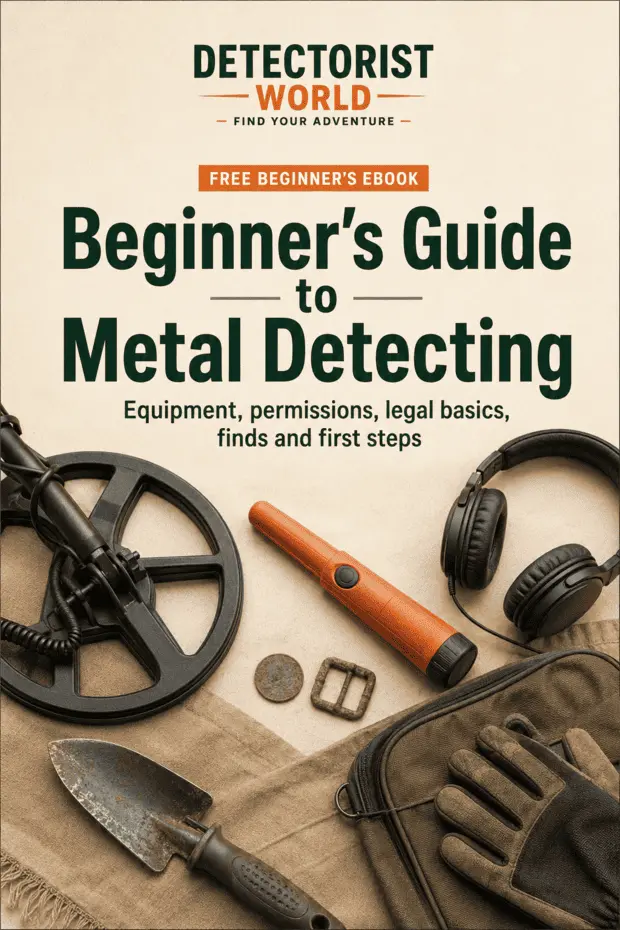
      Start Metal Detecting the Right Way

      Download the free beginner’s guide covering the equipment,
      permissions and essential advice you need to start metal
      detecting properly.

      • Choose the right beginner equipment
      • Understand permissions and UK legal basics
      • Avoid the mistakes most beginners make

      Detectorist World Beginner’s Guide to Metal Detecting ebook cover