Detectorist World

Independent metal detector reviews, clubs and UK guides
Location Guide • South East

Metal Detecting in East Sussex

The South Downs chalk offers good detecting while the Weald has medieval iron industry connections. Roman Anderita (Pevensey) and Noviomagus (Chichester) influence the county’s Roman finds density.

Top Site Type
South Downs chalk arable
Best Detector Type
Multi-frequency
Region
South East

FROM THE PORTABLE ANTIQUITIES SCHEME

Metal Detecting Finds
in East Sussex

Selected archaeological finds from the PAS records for East Sussex.

Database records
14,950
Recorded objects
17,296
Post Medieval seal matrix from East SussexPOST MEDIEVAL

Post Medieval seal matrix

A complete post medieval cast copper alloy four arm cruciform type seal matrix dating c. AD 1600-1700.

Explore this find

Photo: Sussex Archaeological Society · CC-BY
Licence label and image metadata on the linked PAS record.

Post Medieval copper alloy finger-ring from East SussexPOST MEDIEVAL

Post Medieval copper alloy finger-ring

An incomplete and worn late medieval to post medieval composite copper alloy finger ring probably dating c. AD1400-1700.

Explore this find

Photo: Sussex Archaeological Society · CC-BY
Licence label and image metadata on the linked PAS record.

PAS data collected 2 November 2026. Selected examples, not the latest discoveries. PAS includes finds reported by metal detectorists and other finders.

Explore the statistics & source notes

Captured period and object-type categories are incomplete. These records do not measure detecting activity or a field’s potential.

Selected historical period categories

  • Post Medieval5,161
  • Medieval5,127
  • Roman2,184
  • Mesolithic541
  • Early Medieval513
More captured categories
  • Undated442
  • Iron Age407
  • Neolithic324
  • Bronze Age137
  • Modern67
  • Palaeolithic36
  • Greek And Roman Provincial5
  • Byzantine3
  • PREHISTORIC2

    Selected object types

    • coin5,001
    • token1,887
    • buckle1,412
    • vessel568
    • mount486
    More captured categories
    • brooch475
    • strap-fitting303
    • weight291
    • debitage272
    • jetton255
    • unidentified object218
    • finger-ring169
    • strap-end168
    • scraper (tool)132
    • thimble126
    • coin-weight125
    • seal matrix117
    • musket-ball105
    • harness pendant96
    • retouched flake96
    • button95
    • spur84
    • ring71
    • bell68
    • core67
    • key (locking)67
    • purse67
    • pin66
    • spoon61
    • harness-fitting60
    • stirrup58
    • knife53
    • assemblage49
    • hooked tag47
    • book fitting46
    • hoard44
    • harness mount42
    • spindle-whorl40
    • blade39
    • stud38
    • toy37
    • ampulla36
    • axehead36
    • dress-hook36
    • cloth-seal35
    • arrowhead33
    • microlith33
    • scabbard33
    • dagger31
    • flake31

      Source: Portable Antiquities Scheme / The Trustees of the British Museum.

      Records and objects are separate measures. Categories are selected, incomplete lists; bars are scaled to the leading displayed category.

      The PAS database search for East Sussex lists 14,950 database records representing 17,296 recorded objects, checked 2 November 2026. A record can describe more than one object. The period and object-type charts above show selected PAS categories, not complete breakdowns of the county totals.

      East Sussex Metal Detecting Clubs

      East Sussex Finds Liaison Officer

      Where You Can Legally Detect in East Sussex

      South Downs access can be complicated by National Park status. Approach farmers carefully and check OS maps for SSSI/NP boundaries. Local clubs navigate this well.

      Can You Metal Detect on Council Land in East Sussex?

      Hastings Borough Council says metal detecting is allowed on its beach but not in its parks and gardens. Confirm the applicable beach boundaries and any recovery conditions before visiting; the allowance should not be assumed to cover Hastings Country Park. Eastbourne and other East Sussex authorities have their own byelaws and site rules. Ask the land manager of your chosen beach, park or open space for current conditions.

      Sources: hastings.gov.uk · hastings.gov.uk

      Important: Council policies and land access rules can change. This information is a guide and may be incomplete, outdated or incorrect. Always check the relevant council official website or contact it directly before detecting. Public access does not automatically mean permission to detect or dig.

      Beaches & Coastal Detecting

      East Sussex has a coastline, and beach detecting follows different rules to farmland. Most foreshore between the high and low water marks in England is Crown Estate land, and the Crown Estate operates a general permission for recreational detecting on much of its managed foreshore, though you should check the current terms. Council-owned beaches often need the local authority’s permission, and some beaches are privately owned or leased. Always check for scheduled monuments, SSSIs and local byelaws before detecting, and never detect where it is signposted as prohibited.

      Geology, Site Types & Detecting Tips in East Sussex

      Geology

      Chalk South Downs give excellent preservation. Weald clay in the north is heavy but productive around medieval sites. Coastal shingle and clay less productive.

      Site Types to Target

      South Downs chalk arable fields, fields near Roman road network, river valley farmland along the Cuckmere and Ouse

      What You Can Find

      Roman coins and military material near Pevensey, medieval pilgrim badges and dress accessories, Bronze Age metalwork on the Downs, Civil War period material

      Notable Discoveries

      Lewes has produced medieval material consistently. Roman finds near Pevensey and along the road from London. Significant Civil War battlefield material from local skirmishes.

      Detecting Tips

      The Downs are the most productive area but require careful permissions work. The Weald can surprise with medieval finds near known manor sites.

      Frequently Asked Questions

      Where can I go metal detecting in East Sussex?

      You can detect on private land in East Sussex with the landowner’s permission, and on much of the Crown Estate foreshore if you are on the coast. You must avoid scheduled monuments, SSSIs and other protected sites. Joining a local club is the easiest way to reach permissioned land.

      Is metal detecting legal in East Sussex?

      Yes. Metal detecting is legal in East Sussex on land where you have the landowner’s permission, as long as you avoid protected sites and follow the law on reporting treasure and recording finds.

      Who is the Finds Liaison Officer for East Sussex?

      East Sussex is covered by a Portable Antiquities Scheme Finds Liaison Officer who records finds made by the public. See the FLO section on this page for contact details, or search finds.org.uk.

      What finds turn up in East Sussex?

      PAS lists 14,950 database records representing 17,296 recorded objects for East Sussex, checked 2 November 2026. These are recorded entries rather than a count of every find made. The period and object-type categories shown in the PAS section are selected, incomplete lists.

      Can you metal detect on council-owned land in East Sussex?

      Hastings allows detecting on its beach but not in its parks and gardens, subject to site conditions. Rules elsewhere in East Sussex vary by council and landowner.

      Sources & Last Checked

      PAS data from finds.org.uk. Last checked 2 November 2026.

      Find local detectorists, clubs, suppliers and FLOs

      Detecting in East Sussex?

      Submit your club, suggest a correction or share a great spot – help make this guide the best local resource for detectorists in East Sussex.

      Submit a ListingSuggest an Edit

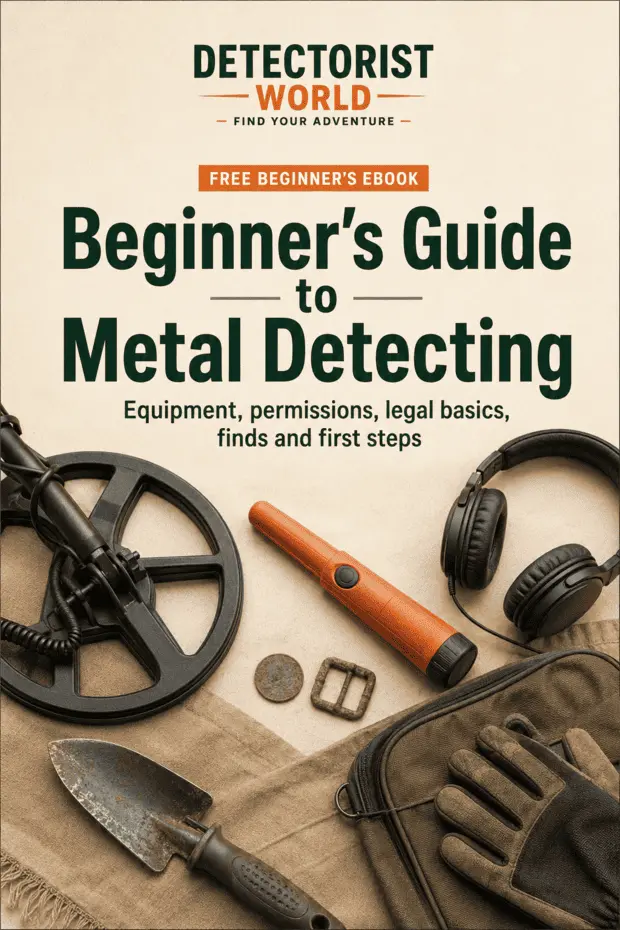
      Start Metal Detecting the Right Way

      Download the free beginner’s guide covering the equipment,
      permissions and essential advice you need to start metal
      detecting properly.

      • Choose the right beginner equipment
      • Understand permissions and UK legal basics
      • Avoid the mistakes most beginners make

      Detectorist World Beginner’s Guide to Metal Detecting ebook cover