Nokta Simplex+ Review
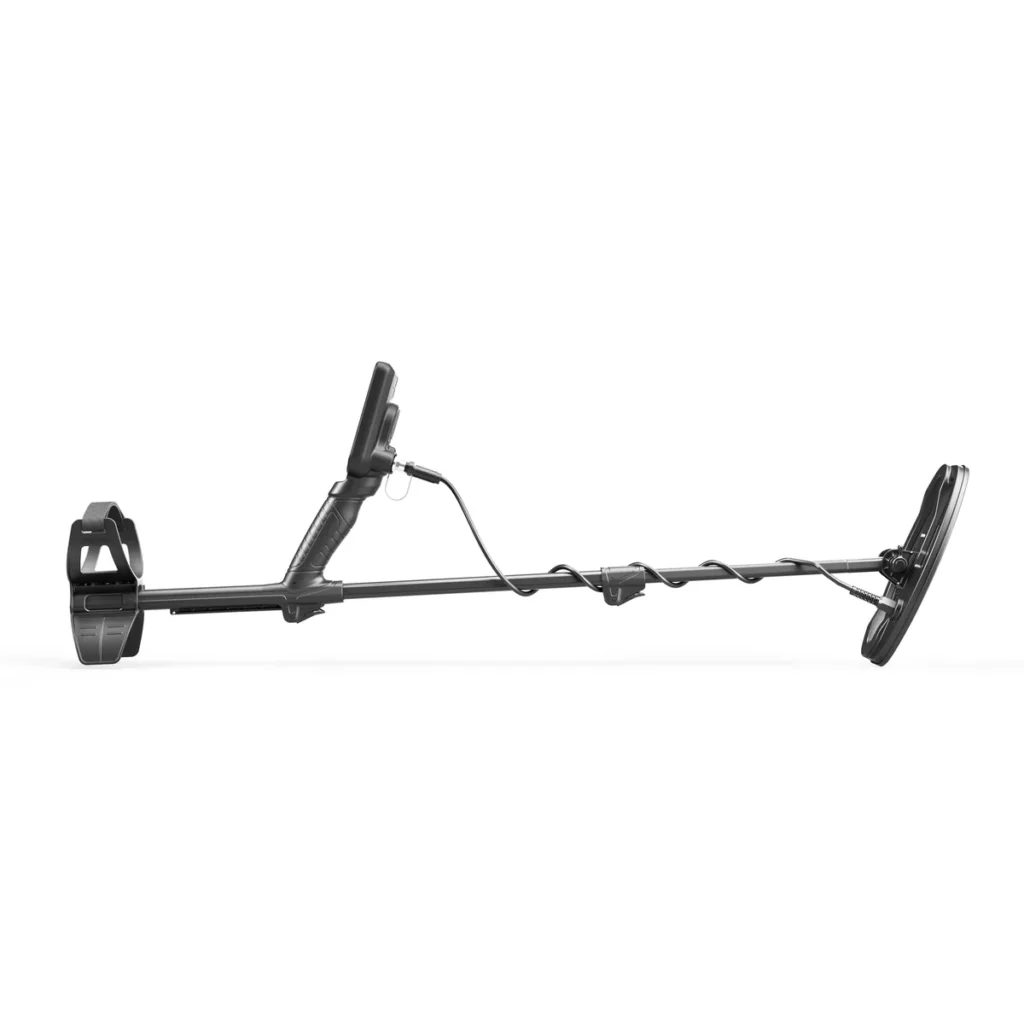

Research-Based Review
Full disclosure: this is a first-hand review. I have owned and used the Nokta Simplex+ on Lincolnshire farmland, and it has always been one of my favourite detectors. It also found my first ever hammered coin, so I will admit there is a little sentiment attached to it. I have balanced my own experience with long-term owner feedback so this does not turn into me simply telling you how much I like it.
I’ve owned quite a few metal detectors over the years, and the Nokta Simplex+ is probably one of the easiest for me to recommend without having to make a load of excuses for it.
It isn’t the newest detector anymore. It isn’t multi-frequency and there are technically better machines available today. But I’ve always had a real soft spot for the Simplex+ because it gives you a lot of detector for the money without making things unnecessarily complicated.
More importantly, I’ve actually used one properly. I’ve spent plenty of time with it on Lincolnshire farmland, and my first ever hammered coin came out of the ground while I was using the Simplex+.
How deep does the Nokta Simplex+ actually go?
Depth is one of those things people become obsessed with when buying a detector, but there isn’t really one honest answer. Soil conditions, target size, how the object is lying in the ground, mineralisation, coil choice and your settings can all make a difference.
What I can give you is a real example.
My first hammered coin was a 1571 Elizabeth I half groat, and I found it at around eight inches deep with the Simplex+.
I was detecting a local farmer’s ploughed field here in Lincolnshire and got a really good signal. I dug down into the clay and somehow managed to fire the lump containing the coin across the field with my shovel.
The signal disappeared from the hole completely.
I then spent about twenty minutes trying to find this bloody lump of clay before eventually spotting the coin sitting on top of it.
After years of detecting and several bits of milk bottle foil that had briefly convinced me I’d finally found hammered silver, this time it was the real thing.
So when somebody asks me whether the Simplex+ has enough depth for normal UK detecting, my answer is yes. I’ve never felt like its depth has stopped me finding things.
Field, Park 1 and Park 2 modes
The different search modes genuinely change how the detector behaves rather than simply being there to make the menu look impressive.
Field mode is the one I would normally use when I want good depth on relatively clean farmland. It is a two-tone mode and suits a slightly slower, more patient style of detecting.
Park 1 is a good general-purpose mode. You get three tones, which gives you a little more audio information while still retaining good depth.
Park 2 is faster. You sacrifice a little depth compared with Field mode, but the recovery speed and target separation improve noticeably.
That matters when you are detecting ground containing iron, rubbish or several closely spaced targets. Sometimes being able to hear two separate targets sitting close together is far more useful than gaining another inch of theoretical depth.
The recovery speed is one of the things I think people sometimes underestimate with the Simplex+. For a detector that originally sat at the budget end of the market, it can separate targets surprisingly well.
The All Metal mode is useful too
The Simplex+ also has a proper All Metal mode.
I wouldn’t personally wander around a rubbish-filled field using it all day because you’d slowly lose the will to live, but it can be very useful for checking questionable signals.
If I’ve got something behaving strangely, switching into All Metal gives me another bit of information before deciding whether I’m going to dig it. It removes the discrimination and lets you hear everything under the coil.
Once you’ve spent enough time with a detector, these little extra bits of information start helping you make better decisions. Although if I’m completely honest, curiosity still wins and I’ll dig plenty of signals I probably shouldn’t.
The built-in pinpoint mode
The built-in pinpoint mode is another feature I use regularly.
Hold down the pinpoint button and the Simplex+ switches from normal motion detection into a non-motion pinpoint mode. As you move the coil towards the centre of the target, the audio changes and the display helps you narrow down where the object is sitting.
Once you get used to it, you can normally get a good idea of where to put the spade. That means smaller holes and less time wondering which side of the hole your target has disappeared into.
I still use a handheld pinpointer once I’ve opened the hole. The two work together rather than one replacing the other.
My only small complaint is that you have to keep the pinpoint button held down while using it. It isn’t a major problem, but after doing it repeatedly throughout the day you do notice it.
It is very easy to use
Probably my favourite thing about the Simplex+ is how little messing about it requires.
You can hand one to somebody relatively new to metal detecting and they don’t need a degree in electronics before they can start finding things.
The basic setup is simple: turn it on, choose your mode, set the sensitivity, ground balance it if necessary and start detecting. There are enough settings to give you control without burying everything under menus you will probably never use.
I’ve always thought there is something to be said for a detector that lets you concentrate on the field rather than constantly staring at the control box.
The numeric target ID is also very good in my experience. No detector can tell you exactly what is in the ground, and anybody expecting a number on a screen to identify every target perfectly is going to be disappointed.
But once you get used to the Simplex+, the combination of target ID, tones and how stable the signal is can tell you quite a lot.
Don’t automatically max out the sensitivity
This is worth mentioning because beginners naturally assume maximum sensitivity must mean maximum performance.
It doesn’t.
The Simplex+ can become quite chatty if you push the sensitivity too high for the ground conditions. You’ll start hearing little chirps and unstable signals that have you stopping every few feet to investigate absolutely nothing.
I much prefer running it at the highest sensitivity where the detector remains stable. Dropping it by one or two levels can make the machine much quieter and easier to understand without suddenly destroying the depth.
A stable detector that you can actually interpret is far more useful than one screaming at everything.
Battery life is excellent
Battery life has always been one of my favourite things about the Simplex+.
It uses an internal rechargeable battery, which Nokta rates at around 12 hours depending on things such as wireless headphones, backlight and flashlight use.
In real use, I’ve found the battery life excellent. Charge it before you go out and you’re normally sorted for a full day’s detecting without having to carry bags of AA batteries around.
You can also charge it from a power bank, which is useful if you’re away for the weekend or doing several days of detecting.
The adjustable shaft and quick-release clips
Another little thing I like is the adjustable shaft.
The Simplex+ collapses down surprisingly small and extends to roughly 132cm when fully opened.
Instead of constantly twisting screw collars, the shaft uses lever-style quick-release clips. Flip them open, adjust the detector to the length you want, lock them again and you’re ready.
It’s only a small design feature, but when you’re packing the detector into the car or setting it up at the edge of a field, it makes life easier.
The shaft is probably the one part of the detector I’ve never been completely convinced by. It works perfectly well, but compared with the rest of the machine I’ve always thought it feels slightly flimsy.
The honest limitations
The main thing to understand before buying a Simplex+ today is that it is a single-frequency detector.
It doesn’t have the simultaneous multi-frequency technology found in newer detectors such as the Nokta Legend and Score range or some of Minelab’s current machines.
For the majority of inland detecting I’ve done, that has never bothered me. But if your main interest is wet salt beaches or particularly difficult mineralised ground, simultaneous multi-frequency machines do have an advantage.
The other limitation is simply age. The Simplex+ has now been discontinued and newer detectors have arrived with more features and newer technology.
That does not suddenly make this a bad detector.
Would I still recommend the Simplex+ in 2026?
Yes, but with a qualification.
If somebody came to me today with several hundred pounds to spend on a brand-new detector, I’d tell them to look at the newer machines available as well. Technology has moved on and there are some very capable detectors competing around the same part of the market.
But if you already own a Simplex+, I certainly wouldn’t be rushing to replace it simply because something newer exists.
And if you find a clean used example at the right price, it can still make a very capable first serious detector.
It’s waterproof, rechargeable, lightweight, simple to understand and has good depth, quick recovery, proper ground balancing, useful search modes and a target ID system that becomes very useful once you learn how the machine behaves.
My Verdict
The Nokta Simplex+ earned its reputation because it gave ordinary detectorists features that previously cost considerably more money. Its age and single-frequency design are now its main limitations, but neither changes the fact that it remains simple, capable and enjoyable to use. Mine has given me good depth, excellent battery life, reliable target information and my first ever hammered coin. I would not call it the best detector available in 2026, but I would still happily recommend one at the right price.
The Simplex+ gave me my first hammered coin, so it will probably always be the detector I am slightly soft on. But that find also proves the most important thing about it: put it over something good and the machine is perfectly capable of finding it.
My Simplex+ Finds & Field Photos
Below are genuine photographs from my own time using the Nokta Simplex+, including the detector out in the field and finds I have personally recovered with it.
Full Specifications
How It Performs On Each Terrain
Pros & Cons
👍 What We Like
- ✓Fully submersible to 3m at this price
- ✓Built-in Bluetooth wireless audio
- ✓Rechargeable battery
- ✓Strong performance-per-dollar
- ✓Vibration alert for silent use
👎 Watch Out For
- ✗Shaft feels slightly flimsy
- ✗Auto and manual GB but less sophisticated than premium machines
- ✗Not as fast recovery as multi-frequency rivals
A capable, well-rounded choice that delivers solid value. Best suited to beginner-level detectorists focused on coins, relics, beach, all-purpose.
Last reviewed: 2026-05-24
Affiliate disclosure: we may earn a commission at no extra cost to you. Our reviews stay independent.
Nokta Simplex+: Owner's Reference and Setup
The practical detail to go with the review: accessories and coils, sensible starting settings and the questions owners ask most. One important note runs through it: the original Simplex+ is not the later Simplex Lite, BT or Ultra, so name the exact model when buying parts.
Best accessories for the Nokta Simplex+
- Match parts to the exact model Nokta's current SX-series coils and carbon shafts are listed for the newer Simplex Ultra, not confirmed for the original Simplex+. Check the original Simplex+ manual or an authorised dealer's part numbers, and do not assume cross-generation fit.
- Waterproof headphones If you plan to submerge it; standard wireless headphones are for land use.
- A coil cover Keep the lead and charger together so a used one stays complete.
- A tidy charging routine Keep the lead and charger together so a used one stays complete.
Coils that fit the Nokta Simplex+
| Coil | Type | Best for |
|---|---|---|
Nokta's current SX-series coils are listed for the newer Simplex Ultra, not confirmed for the original Simplex+. Check the original Simplex+ manual or a dealer's part numbers before buying.
Headphones and audio for the Nokta Simplex+
The Simplex+ supports wireless headphones for land use. Use dedicated waterproof headphones if you plan to submerge it.
Best settings for the Nokta Simplex+
- Start in Park or Field, and use ground balance as the conditions require.
- Run noise cancel where available and keep sensitivity stable rather than maxed.
- Use Beach mode only where salt or wet sand needs it.
- As a beginner, dig repeatable mid tones before chasing complex notch patterns.
Firmware and manuals for the Nokta Simplex+
The Simplex platform is software-updateable through Nokta's support pages, but the exact original Simplex+ version is not fixed here, and Simplex+ firmware should not be mixed up with the newer Simplex generations. On a used one, check whether it was updated.
Nokta host the manuals in their brochures and manuals area. Download the original Simplex+ English manual specifically, so you do not follow Simplex Ultra instructions.
View the manualNokta Simplex+: common questions
Is the Simplex+ waterproof?
Yes, waterproofing was a big part of its appeal at the price. Use waterproof headphones for submerged work.
Is the Simplex+ the same as the Simplex Ultra?
No. The original Simplex+ is the earlier value platform; the Lite, BT and Ultra are later machines. Name the exact model when buying accessories.
Is the Simplex+ a good beginner machine?
Yes, it suits beginners well. If you want simultaneous multi-frequency and stronger salt-beach performance, the Nokta Legend is the step up.
More detectors and guides
See how the Simplex+ compares against the Garrett ACE 400, browse other Nokta machines like the Nokta Legend, Nokta Anfibio Multi and Nokta Gold Kruzer, or read the detecting glossary for plain-English explanations of ground balance, notch discrimination and target ID.